About
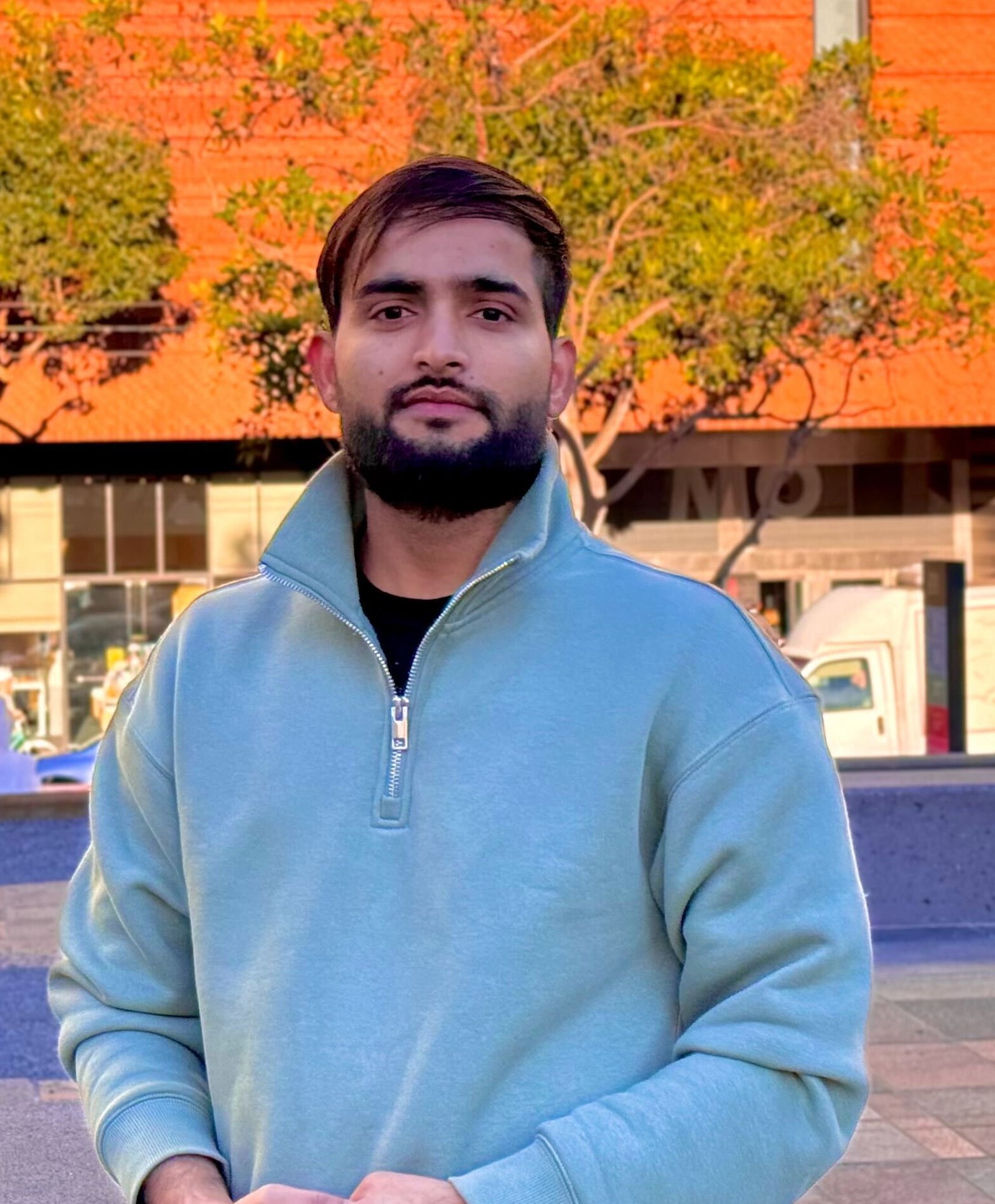
I am currently a Postdoctoral Research Associate at the University of Wisconsin-Madison, working on a NASA-funded urban flood mapping project. My research focuses on leveraging Earth observation foundation models and data fusion-capable transformer architectures to enhance flood inundation mapping in complex environments.Previously, as a Postdoctoral Researcher at The Ohio State University, I developed robust Earth observation methods for large-scale mapping of potential natural (gold) hydrogen sites globally. Using multisource remote sensing data and deep learning, we successfully generated the first-ever global dataset of potential hydrogen sites, which holds significant promise for renewable energy applications and climate change mitigation.
I earned a bi-nationally supervised Doctoral Degree from the Academy of Scientific and Innovative Research and the German Aerospace Center (DLR), Germany. My Ph.D. research focused on developing deep-learning frameworks for mapping glaciers and glacial lakes in the Himalayas, modeling glacial lake outburst floods, and estimating long-term glacier velocities. My broader research interests lie at the intersection of computer vision, remote sensing, and Earth observation, with a particular focus on assessing current and future risks in water resources. My goal is to develop robust Earth observation solutions that map complex Earth features and processes, generating reliable long-term datasets to enhance our understanding of spatio-temporal changes. I hold multiple certifications in Python, Machine Learning, and Linux for scientific computing. I am proficient in remote sensing, machine learning, foundational models, Transformers, Microsoft Office, and data management. Passionate about environmental and social sustainability, I aim to apply my skills and expertise to tackle global challenges.
Academic Achievements
- 2025 Young Scientist travel Award to attend Debris Cover Glacier Workshop, ISTA Austria (1000$)
- 2024 Professional development/travel award: Office of Postdoctoral affair, OSU USA. (700$).
- 2019 IASC Early Career Scientist travel award for attending ISMASS workshop, Reykjavik. (1500 $).
- 2019 DAAD-Bi-nationally supervised doctoral degree fellowship (~24000 Euro).
- 2019 Best poster award “Third” at 5th International YES Congress, Berlin (Certificate and Book).
- 2019- DST-International Travel Support to attend 5th International YES Congress, Berlin (~1500 $).
- 2018- Innovation in Science Pursuit for Inspired Research (INSPIRE), DST-India (~13,000 $)
News
- February 2026: our latest study is now available on IEEE Xplore (official publication version), available here.
- January 2026: our workshop paper in WACV (CV4EO-Workshop) introduces Prithvi-CAFE for improved flood inundation mapping, available here.
- January 2026: our workshop paper in WACV (GeoCV-Workshop) presents GLACIA, a multimodal large language model framework for glacial lake segmentation with positional reasoning, available here.
- November 2025: our preprint on benchmarking geo-foundation models for flood inundation mapping across Sentinel-1, Sentinel-2, and PlanetScope is available here.
- February 2025: read our new article published in Water Resources Research about declining groundwater storage in the Indus Basin, available here.
- February 2025: read our new article published in Science of Remote Sensing about improved and consistent GRACE/GRACE-FO data using machine learning, available here.
- September 2024: read our new article published in Remote Sensing of Environment about the most updated glacial lake inventory in HMA using deep learning, available here.
- July 2024: read our new article published in Remote Sensing Applications: Society and Environment about increasing glacial lake outburst flood risk in Sikkim, available here.
- May 2024: joined Social-Pixel Lab at the University of Arizona as a Postdoctoral Research Associate.