Publications

Journal Articles


Prithvi-Complimentary Adaptive Fusion Encoder (CAFE): unlocking full-potential for flood inundation mapping

Published in WACV (CV4EO-Workshop), 2026

Landslide Susceptibility Assessment
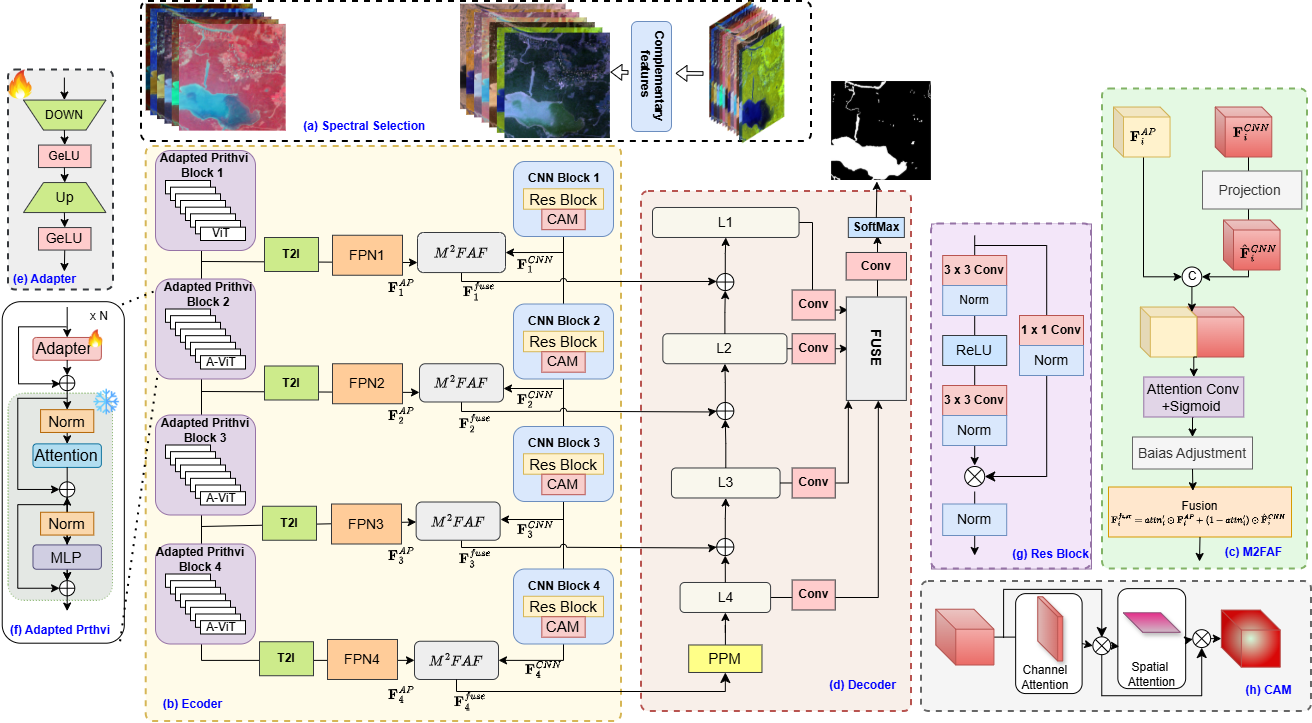
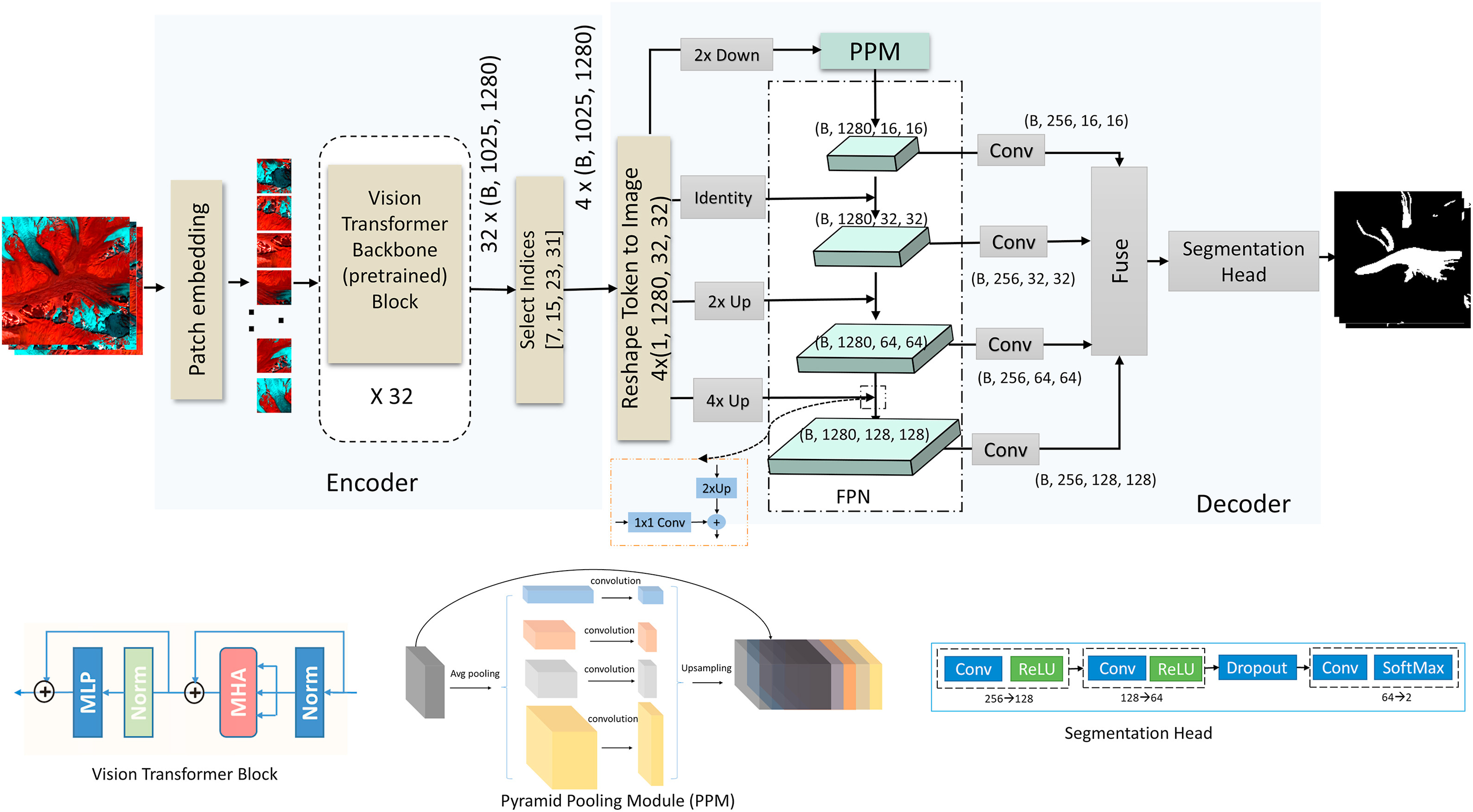
Figure: Overview of Prithvi-CAFE architecture.

Abstract

Geo-Foundation Models (GFMs), have proven effective in diverse downstream applications, including semantic segmentation, classification, and regression tasks. However, in case of flood mapping using Sen1Flood11 dataset as a downstream task, GFMs struggles to outperform the baseline U-Net, highlighting model’s limitation in capturing critical local nuances. To address this, we present the Prithvi-Complementary Adaptive Fusion Encoder (CAFE), which integrate Prithvi GFM pretrained encoder with a parallel CNN residual branch enhanced by Convolutional Attention Modules (CAM). Prithvi-CAFE enables fast and efficient fine-tuning through adapters in Prithvi and performs multi-scale, multi-level fusion with CNN features, capturing critical local details while preserving long-range dependencies. We achieve state-of-the-art results on two comprehensive flood mapping datasets: Sen1Flood11 and FloodPlanet. On Sen1Flood11 test data, Prithvi-CAFE (IoU 83.41) outperforms the original Prithvi (IoU 82.50) and other major GFMs (TerraMind 82.90, DOFA 81.54, spectralGPT: 81.02). The improvement is even more pronounced on the hold-out test site, where Prithvi-CAFE achieves an IoU of 81.37 compared to the baseline UNet (70.57) and original Prithvi (72.42). On FloodPlanet, Prithvi-CAFE also surpasses the baseline U-Net and other GFMs, achieving an IoU of 64.70 compared to U-Net (60.14), Terramind (62.33), DOFA (59.15) and Prithvi 2.0 (61.91). Our proposed simple yet effective Prithvi-CAFE demonstrates strong potential for improving segmentation tasks where multi-channel and multi-modal data provide complementary information and local details are critical.


GLACIA: Instance-Aware Positional Reasoning for Glacial Lake Segmentation via Multimodal Large Language Model

Published in WACV (GeoCV-Workshop), 2026

Landslide Susceptibility Assessment
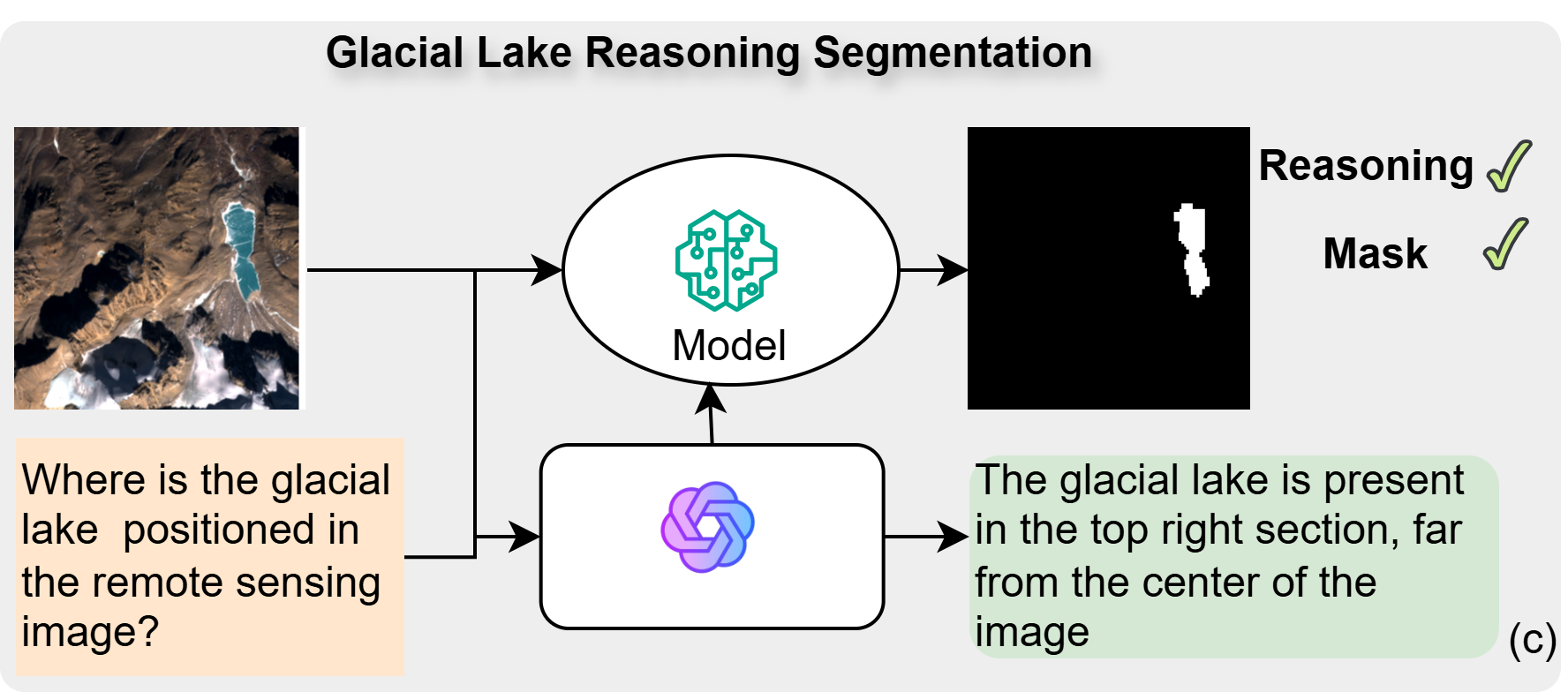
Figure: Conceptual shift from traditional segmentation (a) and VQA-based reasoning (b) to our reasoning-driven paradigm (c), which unifies accurate instance-specific masks with interpretable positional reasoning.
Landslide Susceptibility Assessment
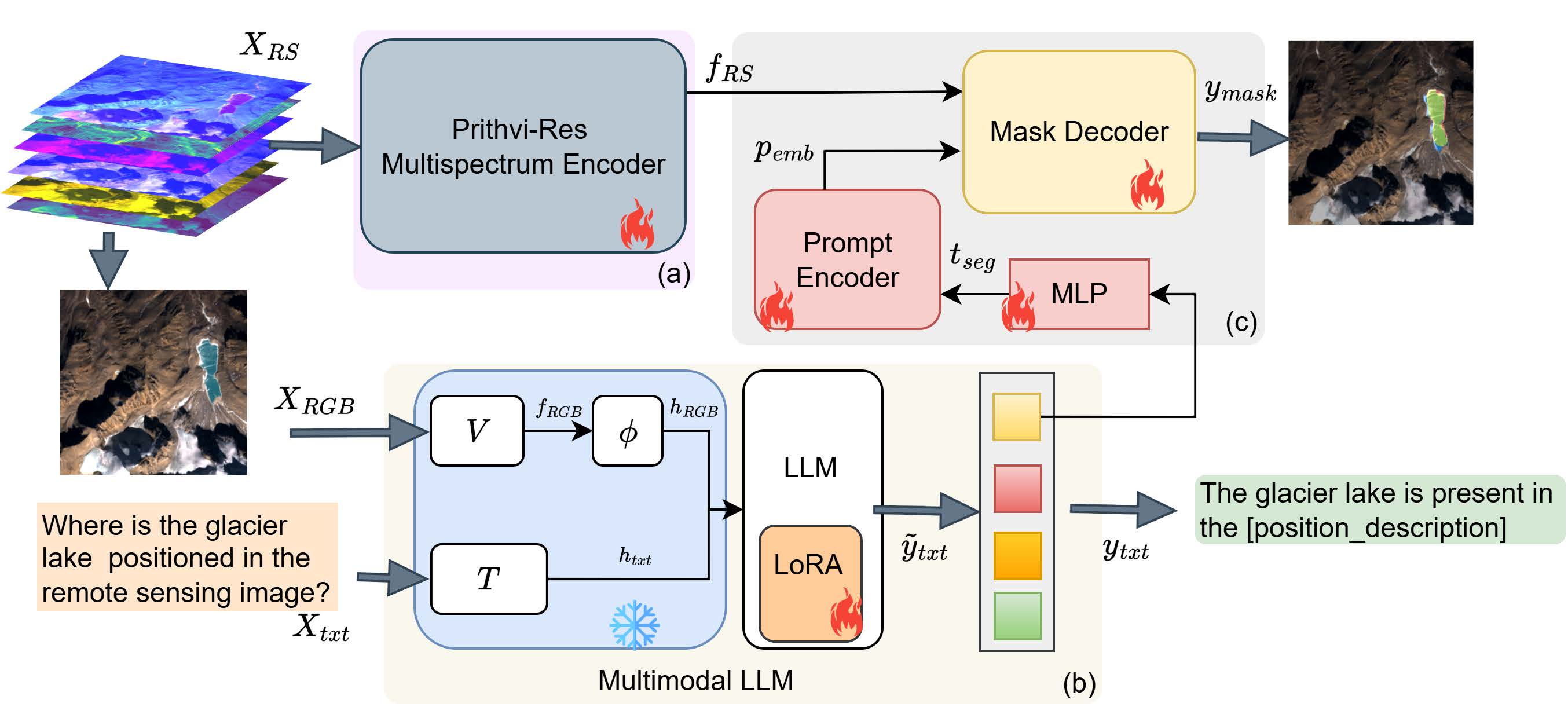
Figure: Overview of the proposed architecture of GLACIA.

Abstract

Glacial lake monitoring bears great significance in mitigating the anticipated risk of Glacial Lake Outburst Floods. However, existing segmentation methods based on convolutional neural networks (CNNs) and Vision Transformers (ViTs), remain constrained to pixel-level predictions, lacking high-level global scene semantics and human-interpretable reasoning. To address this, we introduce GLACIA (\textbf{G}lacial \textbf{LA}ke segmentation with \textbf{C}ontextual \textbf{I}nstance \textbf{A}wareness), the first framework that integrates large language models with segmentation capabilities to produce both accurate segmentation masks and corresponding spatial reasoning outputs. We construct the Glacial Lake Position Reasoning (GLake-Pos) dataset pipeline, which provides diverse, spatially grounded question-answer pairs designed to overcome the lack of instance-aware positional reasoning data in remote sensing. Comparative evaluation demonstrate that GLACIA (mIoU: 87.30) surpasses state-of-the-art method based on CNNs (mIoU: 78.55 - 79.01), ViTs (mIoU: 69.27 - 81.75), Geo-foundation models (mIoU: 76.37 - 87.10), and reasoning based segmentation methods (mIoU: 60.12 - 75.66). Our approach enables intuitive disaster preparedness and informed policy-making in the context of rapidly changing glacial environments by facilitating natural language interaction, thereby supporting more efficient and interpretable decision-making.


Assessing Geo-Foundational Models for Flood Inundation Mapping: Benchmarking models for Sentinel-1, Sentinel-2, and Planetscope

Published in Under-Review, 2025

Landslide Susceptibility Assessment
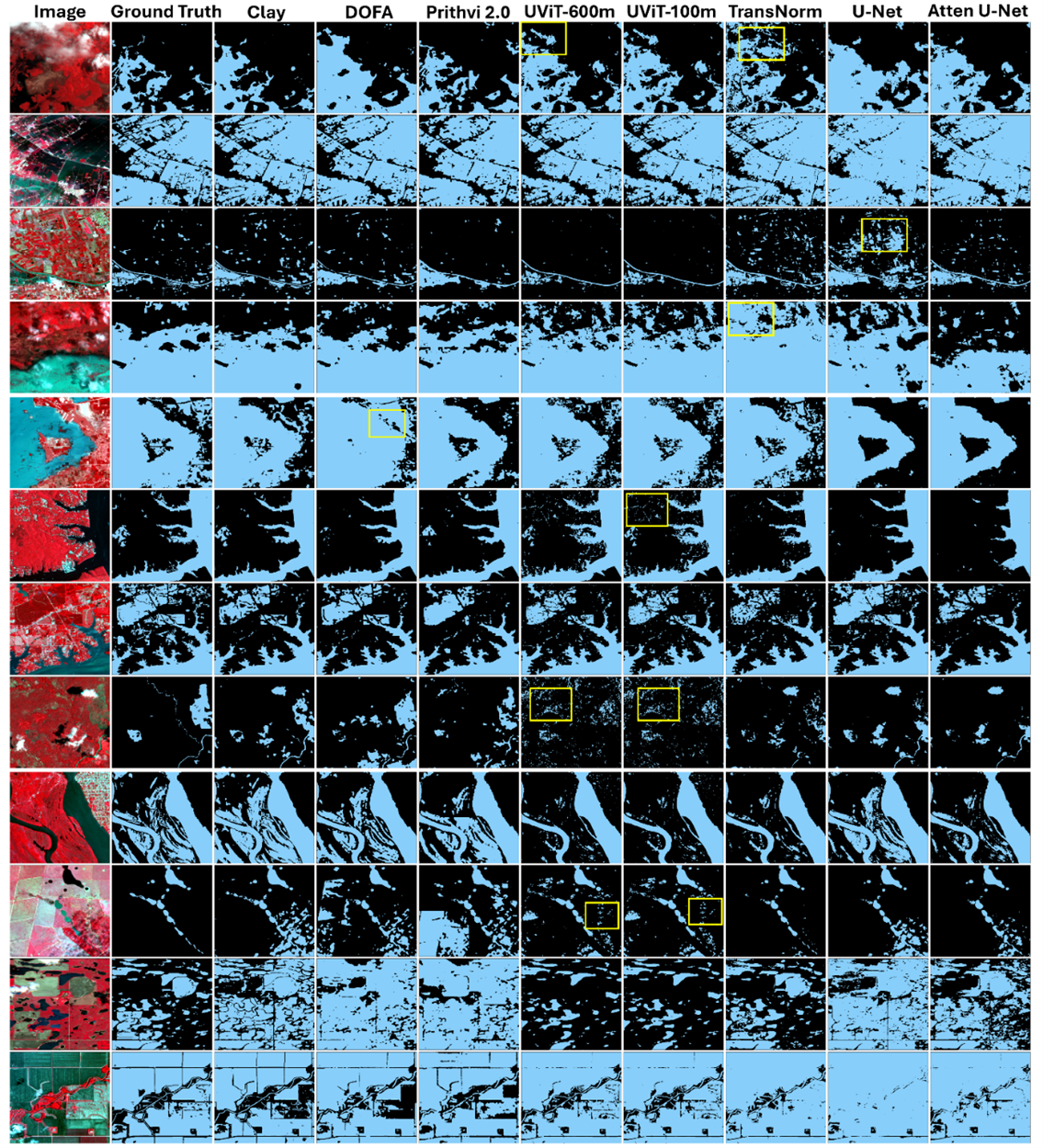
Figure: A visual analysis of model performance showing Clay, Prithvi, DOFA GFMs outperform traditional CNN models and vision transformers (TransNorm). Yellow boxes show examples of false positive classification by models.
Landslide Susceptibility Assessment
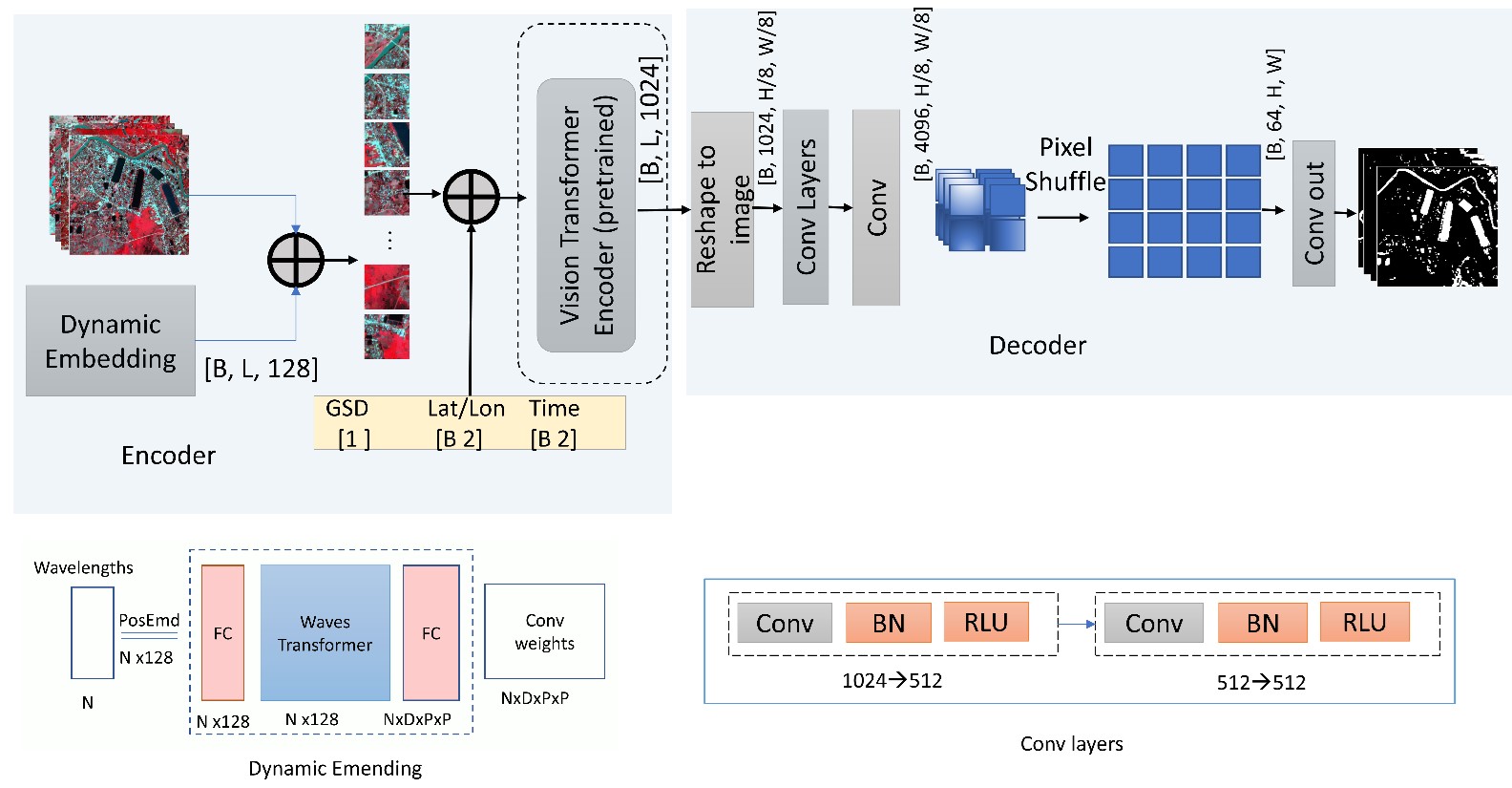
Figure: Fine-tuning Clay Geo-Foundation Model for flood inundation mapping.

Abstract

Geo-Foundational Models (GFMs) enable fast and reliable extraction of spatiotemporal information from satellite imagery, improving flood inundation mapping by leveraging location and time embeddings. Despite their potential, it remains unclear whether GFMs outperform traditional models like U-Net. A systematic comparison across sensors and data availability scenarios is still lacking, which is an essential step to guide end-users in model selection. To address this, we evaluate three GFMs, Prithvi 2.0, Clay V1.5, DOFA, and UViT (a Prithvi variant), against TransNorm, U-Net, and Attention U-Net using PlanetScope, Sentinel-1, and Sentinel-2. We observe competitive performance among all GFMs, with only 2-5% variation between the best and worst models across sensors. Clay outperforms others on PlanetScope (0.79 mIoU) and Sentinel-2 (0.70), while Prithvi leads on Sentinel-1 (0.57). In leave-one-region-out cross-validation across five regions, Clay shows slightly better performance across all sensors (mIoU: 0.72(0.04), 0.66(0.07), 0.51(0.08)) compared to Prithvi (0.70(0.05), 0.64(0.09), 0.49(0.13)) and DOFA (0.67(0.07), 0.64(0.04), 0.49(0.09)) for PlanetScope, Sentinel-2, and Sentinel-1, respectively. Across all 19 sites, leave-one-region-out cross-validation reveals a 4% improvement by Clay compared to U-Net. Visual inspection highlights Clay's superior ability to retain fine details. Few-shot experiments show Clay achieves 0.64 mIoU on PlanetScope with just five training images, outperforming Prithvi (0.24) and DOFA (0.35). In terms of computational time, Clay is a better choice due to its smaller model size (26M parameters), making it ~3x faster than Prithvi (650M) and 2x faster than DOFA (410M). Contrary to previous findings, our results suggest GFMs offer small to moderate improvements in flood mapping accuracy at lower computational cost and labeling effort compared to traditional U-Net.


Beyond Clouds: Global glacial lake mapping combining sentinel-1 and sentinel-2 remote sensing data and geo-foundational model

Status: Under-Review

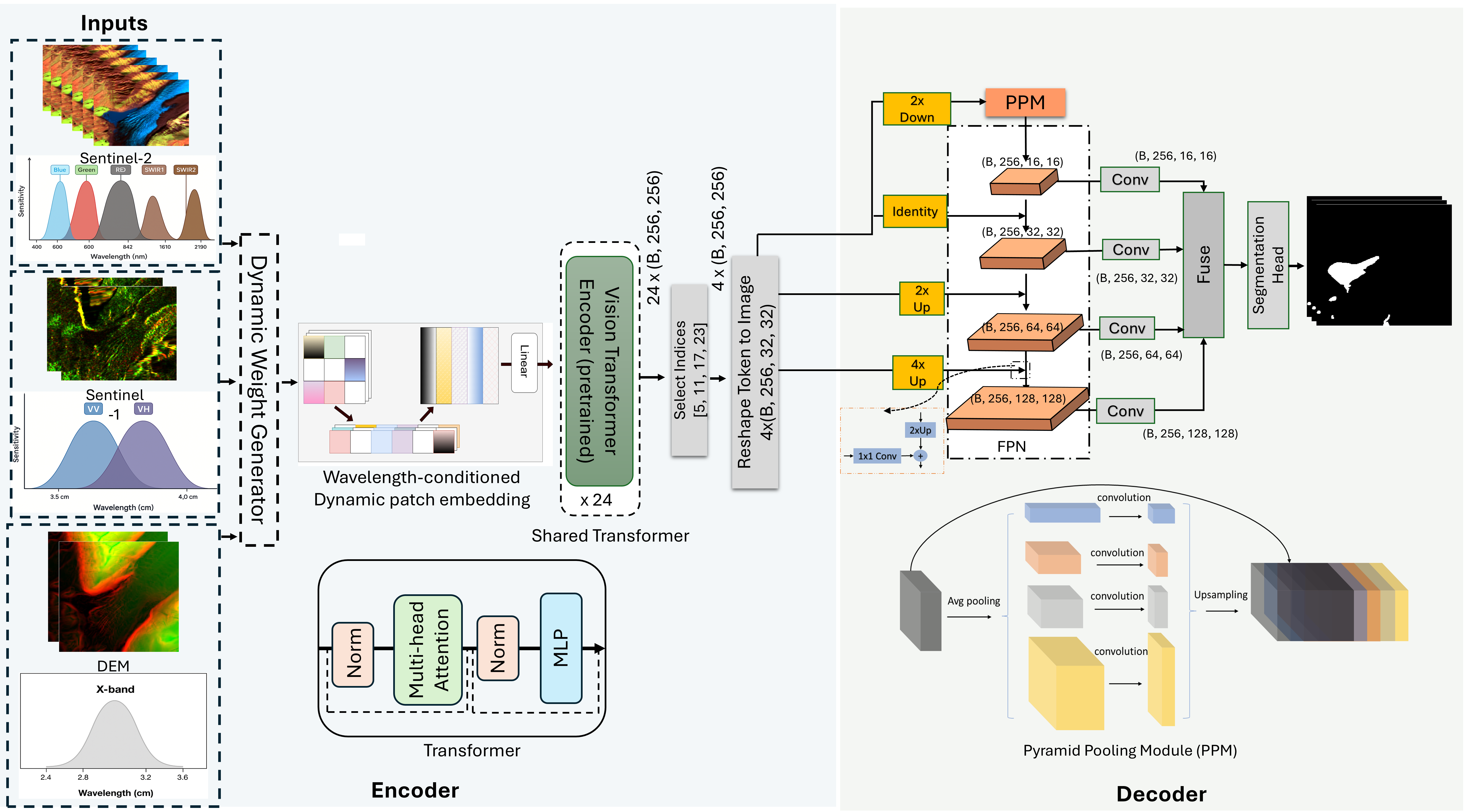
Fine-tuning DOFA
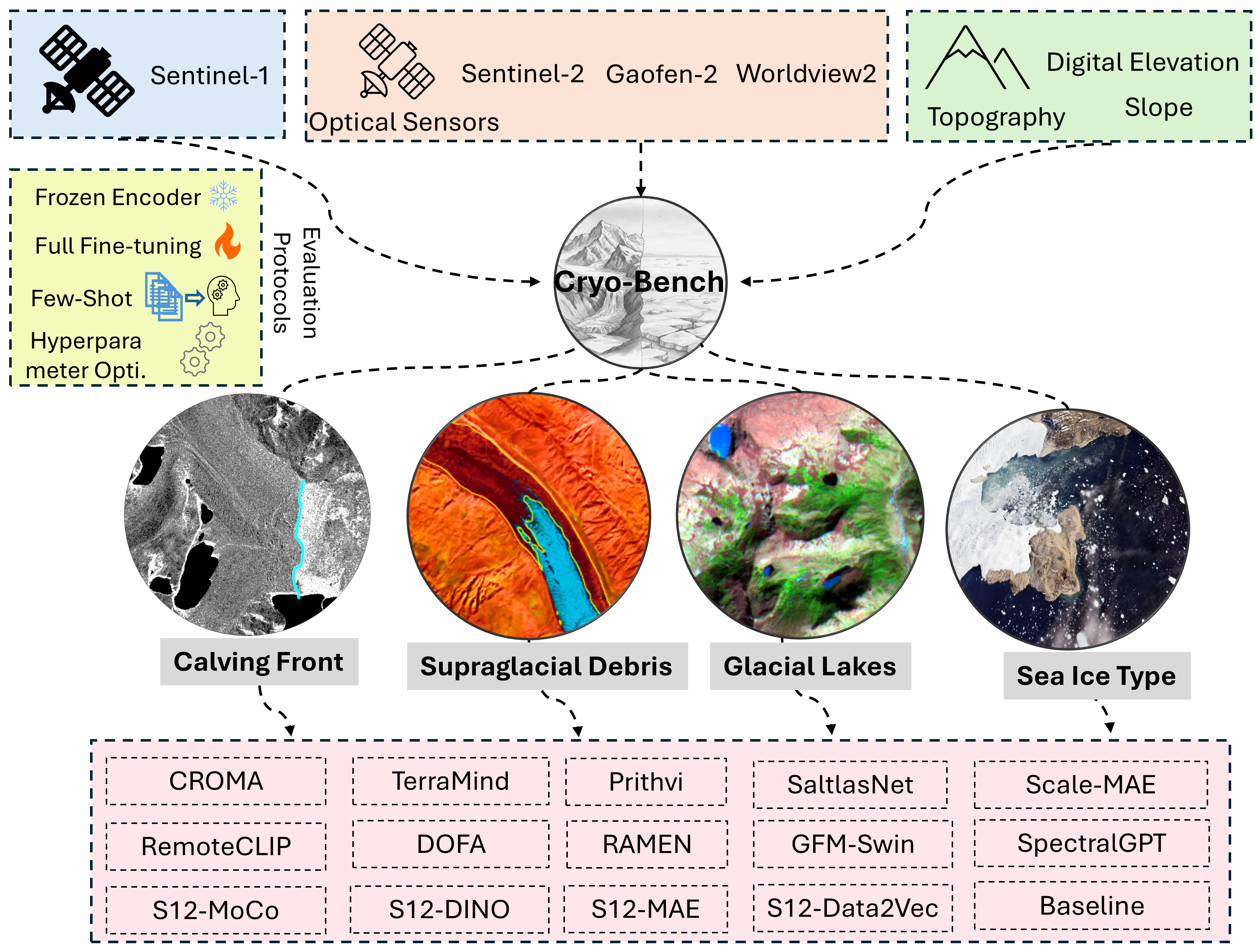
Figure: Schematic illustration of fine-tuning DOFA geo-foundational model for glacial lake mapping using Glacial Lake-Bench.
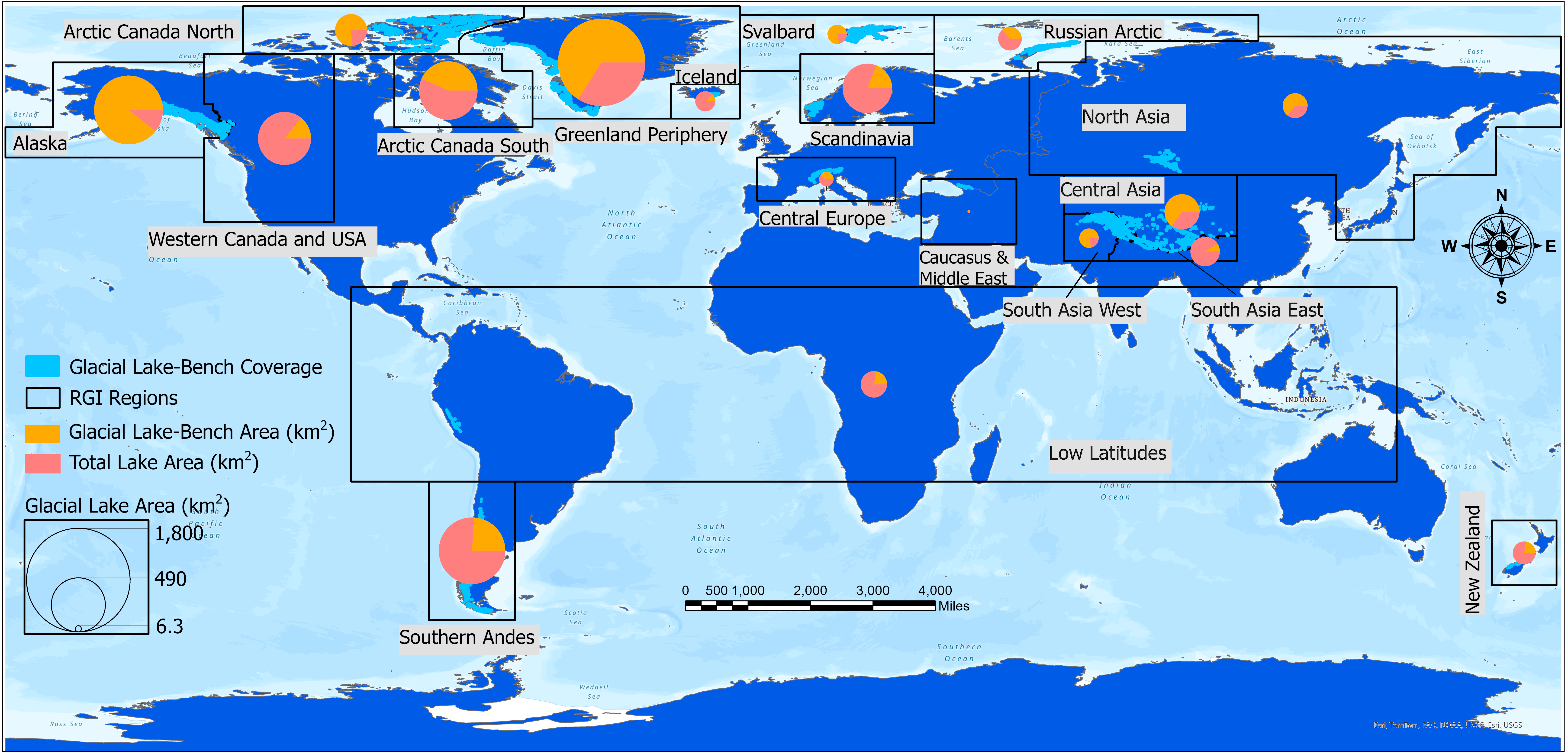
GLB coverage
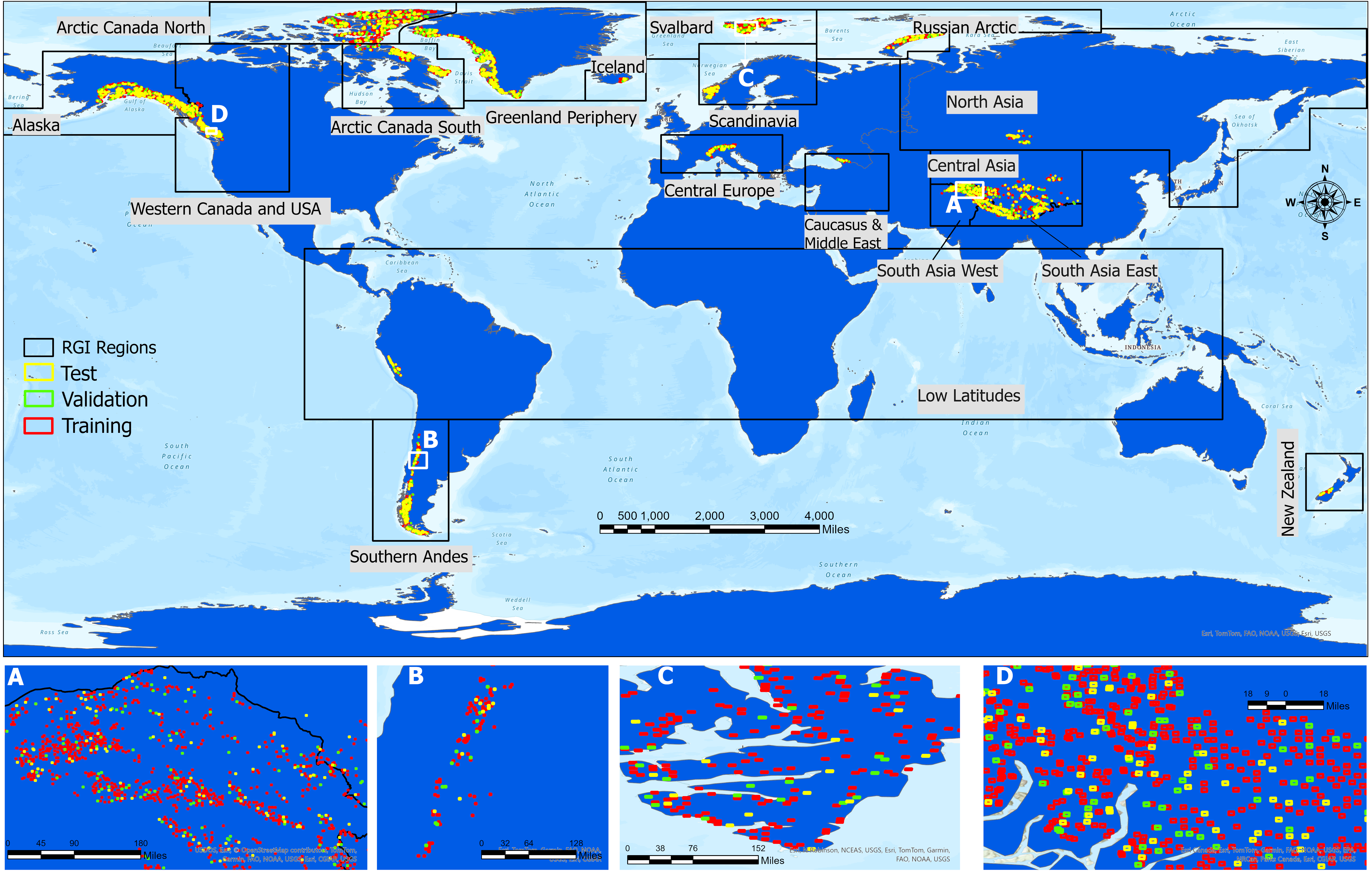
Figure: Compilation of Glacial Lake-Bench across RGI regions. GLB consists of Sentinel-1 (VV, VH), Sentinel-2 (Blue, Green, Red, NIR, SWIR-11, SWIR-12, NDWI), and topographic layers (slope, elevation). The map shows the ratio between total lake area reported by Zhang et al. (2024) and lake area covered by GLB.
Split map
Figure: Spatial distribution of training, testing, and validation sites globally.
Challenging cases
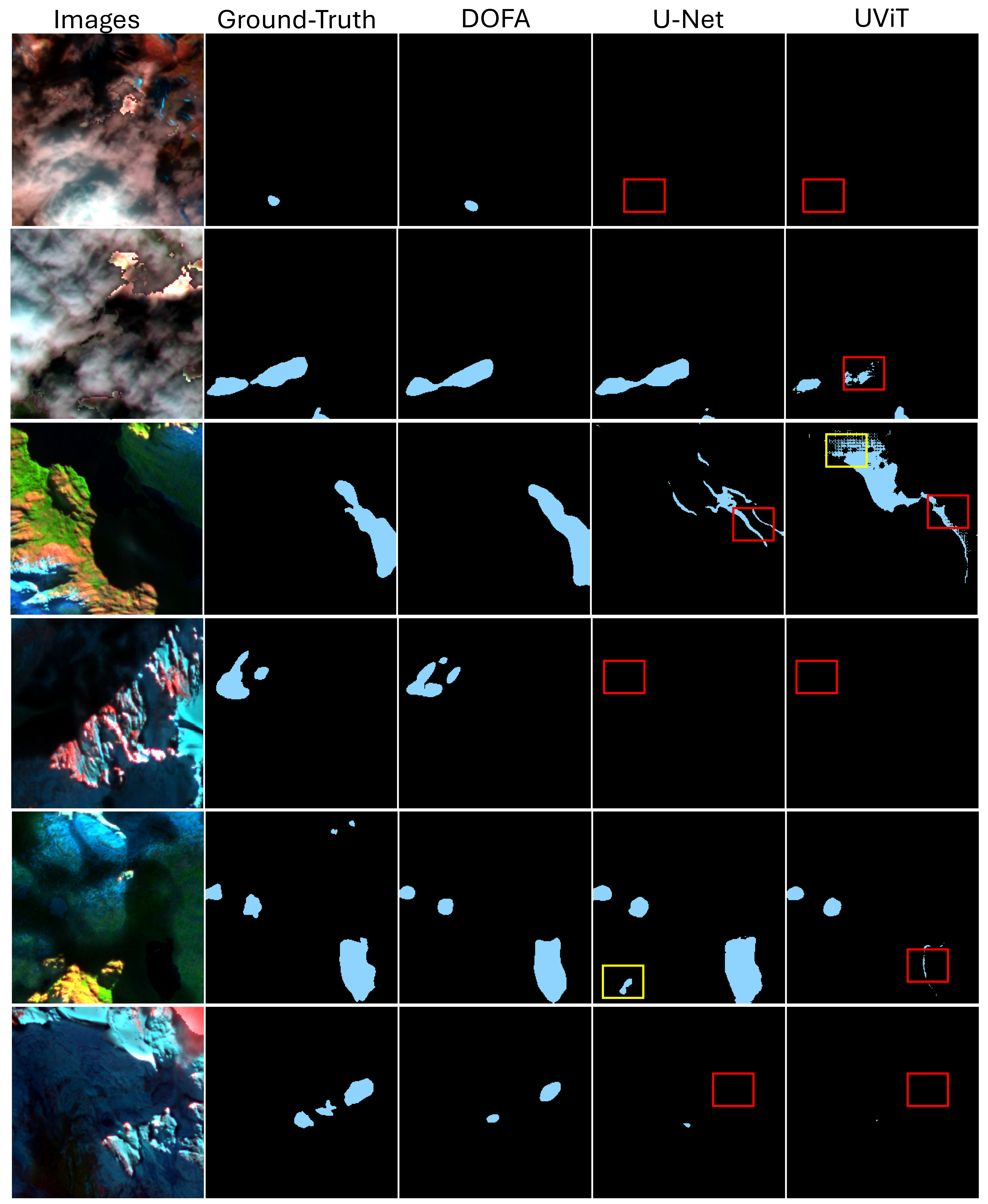
Figure: Example DOFA results on the Glacial Lake-Challenge set: clouds, frozen lakes, shadows, and very small lakes (panel e).

DL4EO: A Unified Python Framework for Preparing Multi-Source Remote Sensing Data for any Segmentation Task

Status: Under-Review

DL4EO overall workflow
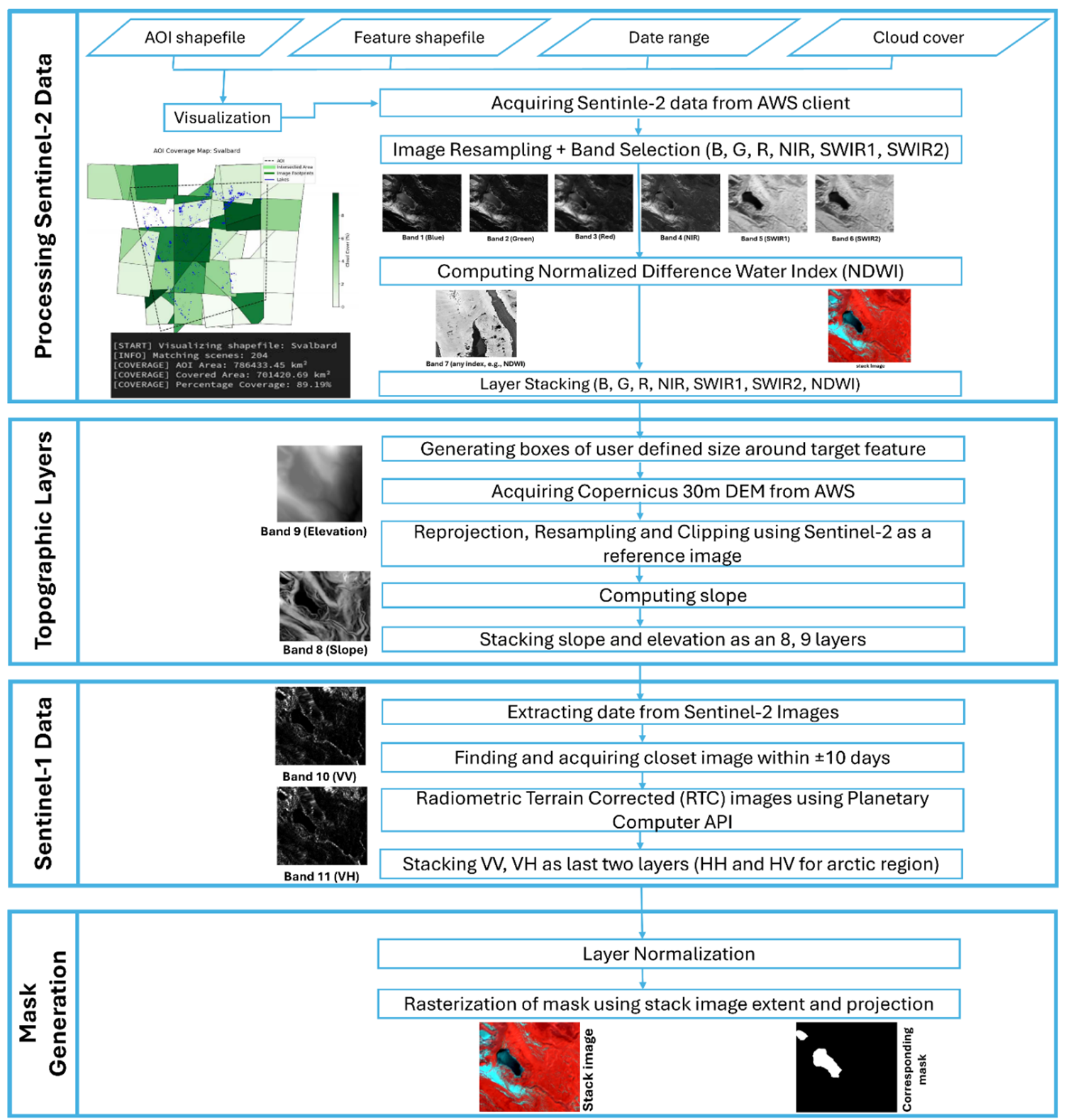
Figure: Overall workflow of the DL4EO package, subdivided into four parts: (1) acquiring and processing Sentinel-2, (2) acquiring and processing topographic layers, (3) acquiring and processing Sentinel-1, and (4) mask/label generation and image normalization.
DL4EO example usage for glacial lake segmentation
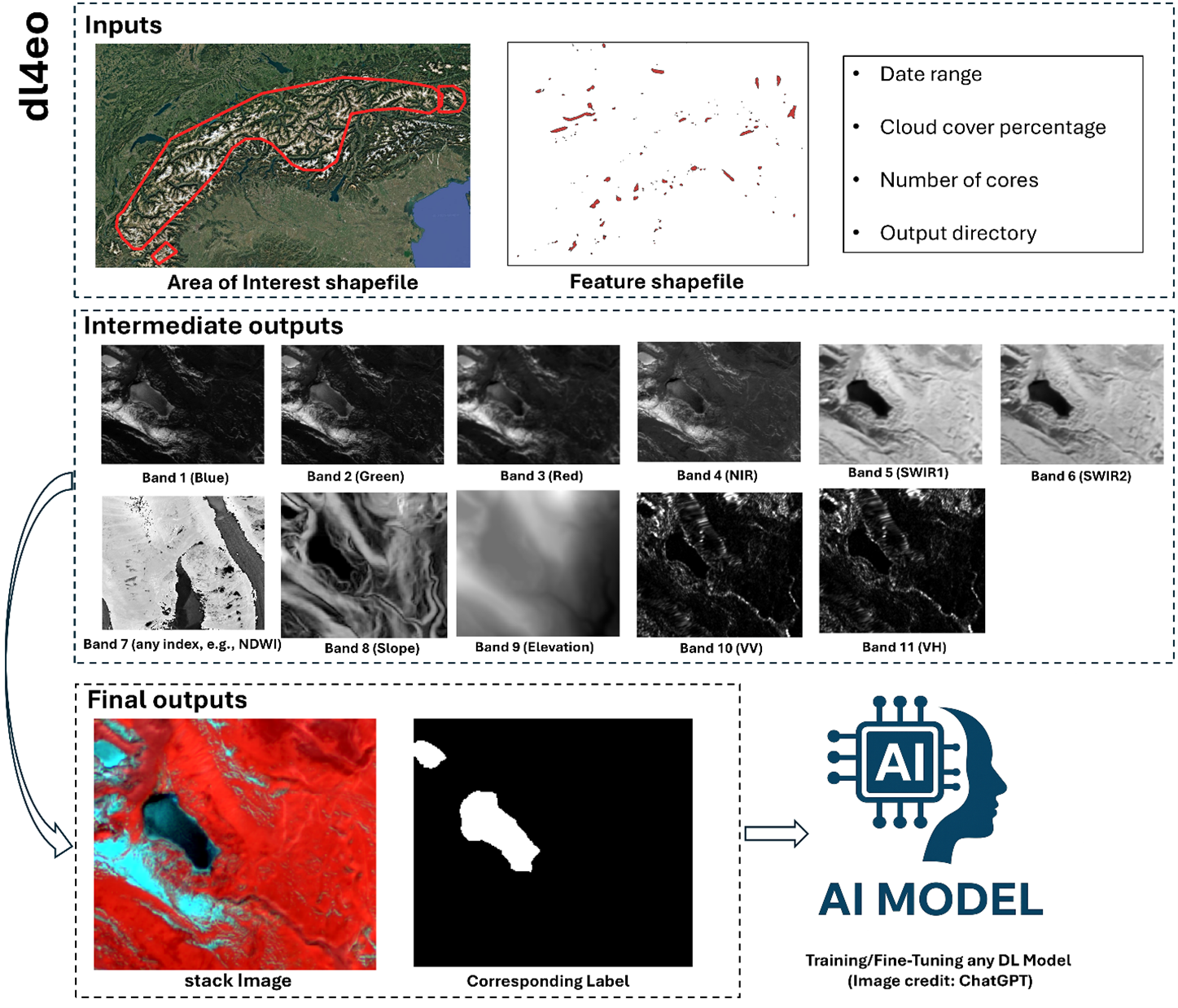
Figure: Example DL4EO use case generating multi-source remote sensing inputs for glacial lake segmentation in Central Europe.
DL4EO Python code example
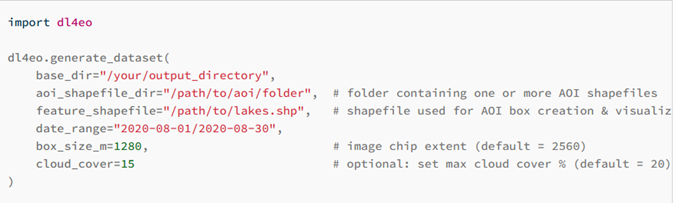
Figure: Python example for generating training and validation datasets for Earth Observation segmentation tasks.

Abstract

Deep Learning (DL) has transformed Earth Observation (EO) tasks such as vegetation mapping, building detection, and water body monitoring by enabling fast and reliable spatiotemporal analysis. Yet, global-scale applications remain limited due to the un-availability of readily available datasets and complexity involved in processing planetary scale datasets. To address this, we present DL4EO, a Python package that simplifies the preparation of remote sensing data for deep learning. It automatically downloads and processes Sentinel-1 (RTC), Sentinel-2 (Level 2C), and Copernicus DEM data, generating consistent image-label pairs of user-defined size without requiring credentials. As an input, package requires a base directory, date range, cloud cover threshold, area of interest (AOI), and a shapefile of the target feature. To acquire Sentinel-1 RTC data, DL4EO selects the closest available image based on the corresponding Sentinel-2 acquisition. It handles projection, resampling, and alignment to produce globally consistent datasets. The final output consists of user define size (e.g., 256×256) images with 11 bands: Blue, Green, Red, NIR, SWIR1, SWIR2, spectral band (e.g., Normalized Difference Water Index: NDWI), Slope, Elevation, VV, and VH and corresponding label mask, target feature with pixel value 1 and rest 0. This fully automated dataset preparation pipeline supports scalable and efficient deep learning applications in Earth observation.


Debris covered glacier mapping using newly annotated multisource remote sensing data and geo-foundational model

Published in Science of Remote Sensing, 2025

Fine-tuning Prithvi GFM for supraglacial debris mapping
Figure: Correlation and IoU of supraglacial debris area between the Prithvi model and manually corrected ground-truth data.
Model comparison for supraglacial debris mapping
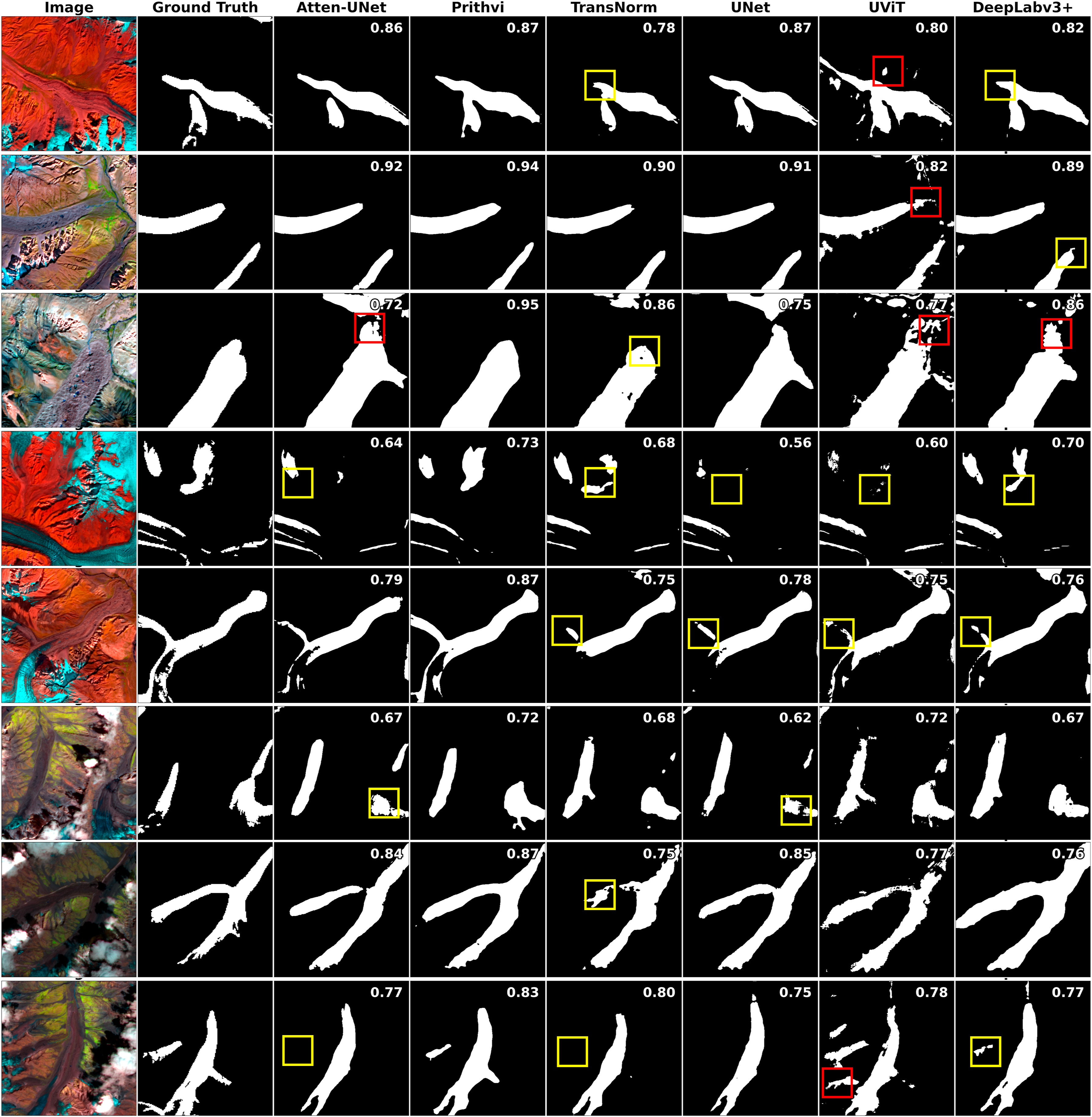
Figure: Comparison of different deep-learning models for supraglacial debris mapping.

Abstract

The automated mapping of debris covered glaciers remains challenging due to spectral similarity between supraglacial debris (on-glaciers) and periglacial debris (off-glaciers). Deep learning offers promising capabilities, yet the lack of high-quality publicly available datasets and limited exploration of optimal model architecture constrain progress in this domain. To address this, we introduce the Global Supraglacial Debris Cover Dataset (GSDD), consisting of 1876 images (∼49,000.00 km2) collected globally from diverse glacierized regions, including High Mountain Asia, Andes, Western Canada, Alaska, and Swiss Alps, to incorporate the heterogeneity of glacial features and environments. This multisource remote sensing dataset includes 10 spectral bands—Blue, Green, Red, Near-Infrared, Shortwave Infrared (SWIR1 & SWIR2), Normalized Difference Rock Index (NDRI), Slope, Elevation, and Velocity—providing critical information to distinguish glacier debris. To evaluate the efficacy of deep learning models for mapping glacier debris, we compare Prithvi Geo-Foundational Model (GFM) combined with multiple decoders, CNN-based models (UNet, Attention U-Net, and DeepLabv3+), a Vision Transformer-based model (TransNorm), and variant of the Prithvi GFM (i.e., UViT). Our results show Prithvi GFM with UperNet decoder outperformed all, achieving mIoU = 0.80 and F1-score = 0.91, surpassing DeepLabv3+ (0.71 mIoU), Attention U-Net (0.73), U-Net (0.72), TransNorm (0.71), and UViT (0.70). Our results demonstrate significant methodological advances in accurately mapping glacier termini, along with the identification of glacier snouts. Feature analysis identified the optimal band combination (B-G-NIR-SWIR-Slope-Elevation) for debris mapping. The GSDD dataset enables direct comparison, development, and evaluation of deep learning models, supporting advancement in fast and reliable automated glacier mapping.


Declining groundwater storage in the Indus basin revealed using GRACE and GRACE‐FO data

Published in Water Resources Research, 2025

Indus basin GWSA trends map and heatmap
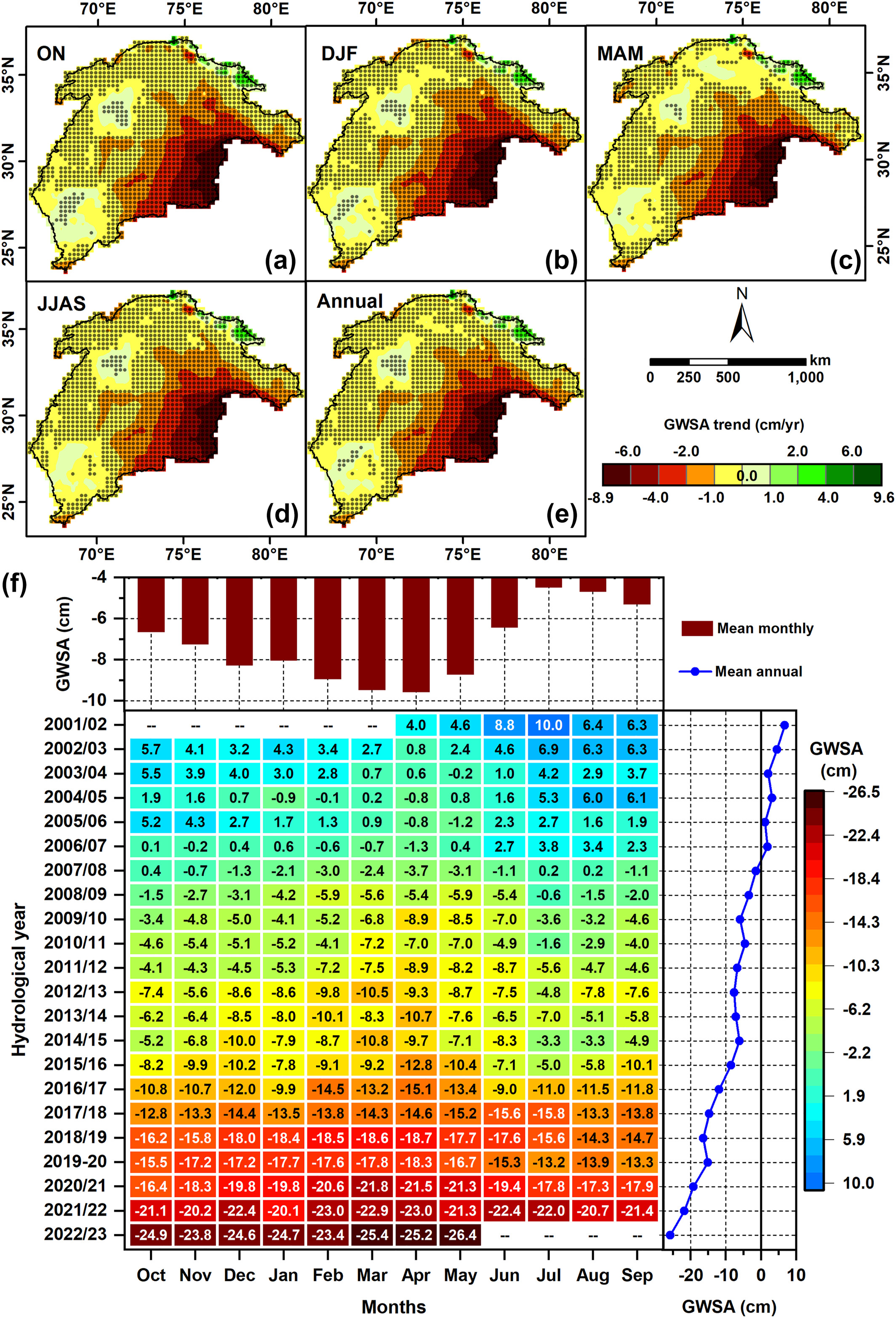
Spatial distribution of GWSA trends at seasonal scales (a–d) and annually (e), with significance levels at p < 0.05. (f) shows the heatmap of monthly GWSA values and their corresponding mean monthly and annual values from April 2002 to May 2023.

Abstract

Snow and glacier melt provide freshwater to millions of people in the Indus basin. However, the unprecedented increase in demand for freshwater and depleting resources due to climate warming has put the region's water resources at risk. Therefore, quantifying water mass variation and anticipating changes in hydrological regimes that affect downstream freshwater supply are of utmost importance. To address this, we used Gravity Recovery and Climate Experiment (GRACE) and GRACE Follow-On derived terrestrial water storage anomaly (TWSA) data from April 2002 to May 2023 over the Indus basin. Several gaps in these data, totaling 33 months, significantly impact regional trends and predictions of water mass changes. We apply a machine learning-based MissForest algorithm to fill these gaps and compare our results with four previous studies. Annual TWSA shows a declining trend (−0.65 cm/yr) before 2015/16, with a significantly higher (−2.16 cm/yr) after 2015/16. Based on the estimate for the annual groundwater storage anomaly (GWSA), a major portion (83.7%) of the basin is experiencing a significant declining trend (>−0.15 cm/yr, p < 0.05). Glaciated region has a less severe decreasing trend (−0.78 cm/yr) compared to the non-glaciated region (−1.44 cm/yr). Among sub-basins, the upper Indus shows the lowest decline (−0.42 cm/yr), while Panjnad exhibits the highest (−1.70 cm/yr). Annual precipitation and runoff are decreasing, while temperature shows no trend. However, evapotranspiration is increasing, likely due to a significant increase in vegetation (0.23%/yr) over the basin. The trends of hydroclimatic variables, vegetation, and anthropogenic factors indicate a consistently decreasing GWSA in the region.


Combining machine learning algorithms for bridging gaps in GRACE and GRACE Follow-On missions using ERA5-Land reanalysis

Published in Science of Remote Sensing, 2025

Landslide Susceptibility Assessment
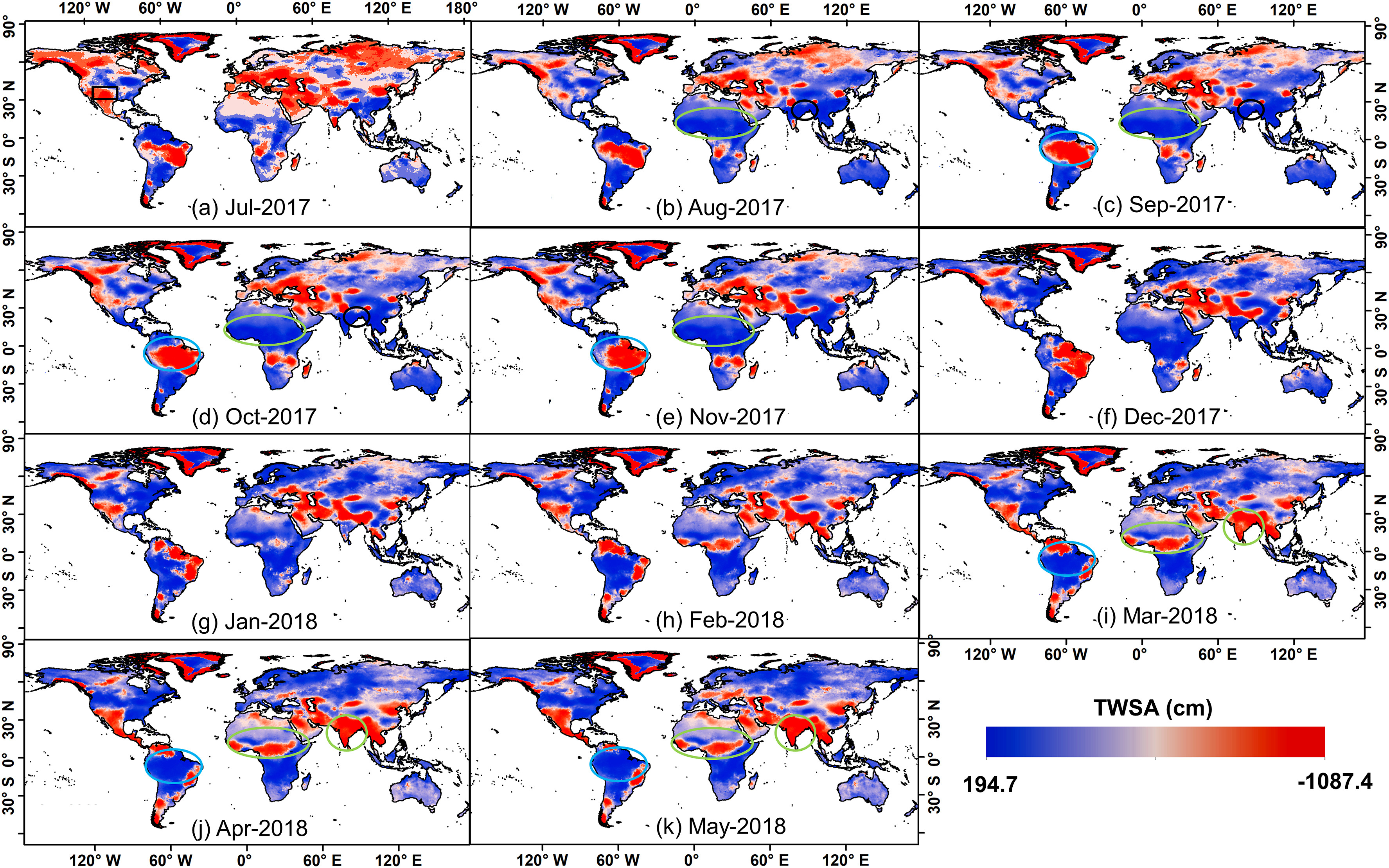
Figure: Monthly multi-model Leader predictions of TWSA during the GRACE and GRACE-FO data gap (July 2017 to May 2018). Black boxes and circles highlight extreme events (drought and flood), while light green and light blue circles indicate strong seasonal variations in predicted TWSA.

Abstract

The Gravity Recovery and Climate Experiment (GRACE) and GRACE Follow-On (GFO) missions have provided valuable data for monitoring global terrestrial water storage anomalies (TWSA) over the past two decades. However, the nearly one-year gap between these missions pose challenges for long-term TWSA measurements and various applications. Unlike previous studies, we use a combination of Machine Learning (ML) methods—Random Forest (RF), Support Vector Machine (SVM), eXtreme Gradient Boosting (XGB), Deep Neural Network (DNN), and Stacked Long-Short Term Memory (SLSTM)—to identify and efficiently bridge the gap between GRACE and GFO by using the best-performing ML model to estimate TWSA at each grid cell. The models were trained using six hydroclimatic variables (temperature, precipitation, runoff, evapotranspiration, ERA5-Land derived TWSA, and cumulative water storage change), as well as a vegetation index and timing variables, to reconstruct global land TWSA at 0.5° grid resolution. We evaluated the performance of each model using Nash-Sutcliffe Efficiency (NSE), Pearson's Correlation Coefficient (PCC), and Root Mean Square Error (RMSE). Our results demonstrate test accuracy with area weighted average NSE, PCC, and RMSE of 0.51 ± 0.31, 0.71 ± 0.23, and 4.75 ± 3.63 cm, respectively. The model's performance was further compared across five climatic zones, with two previously reconstructed products (Li and Humphrey methods) at 26 major river basins, during flood/drought events, and for sea-level rise. Our results showcase the model's superior performance and its capability to accurately predict data gaps at both grid and basin scales globally.


Automatic extraction of glacial lakes from Landsat imagery using deep learning across the Third Pole

Published in Remote Sensing of Environment, 2024

Landslide Susceptibility Assessment
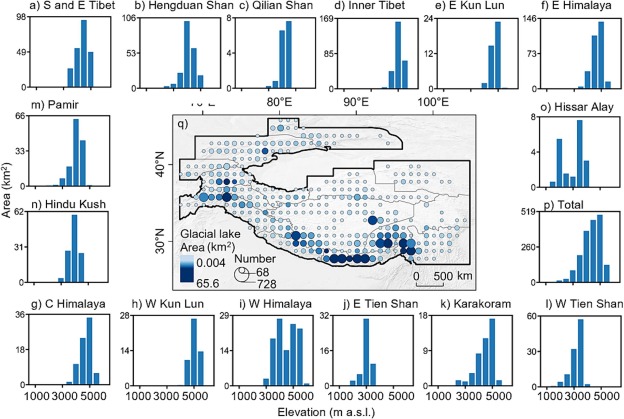
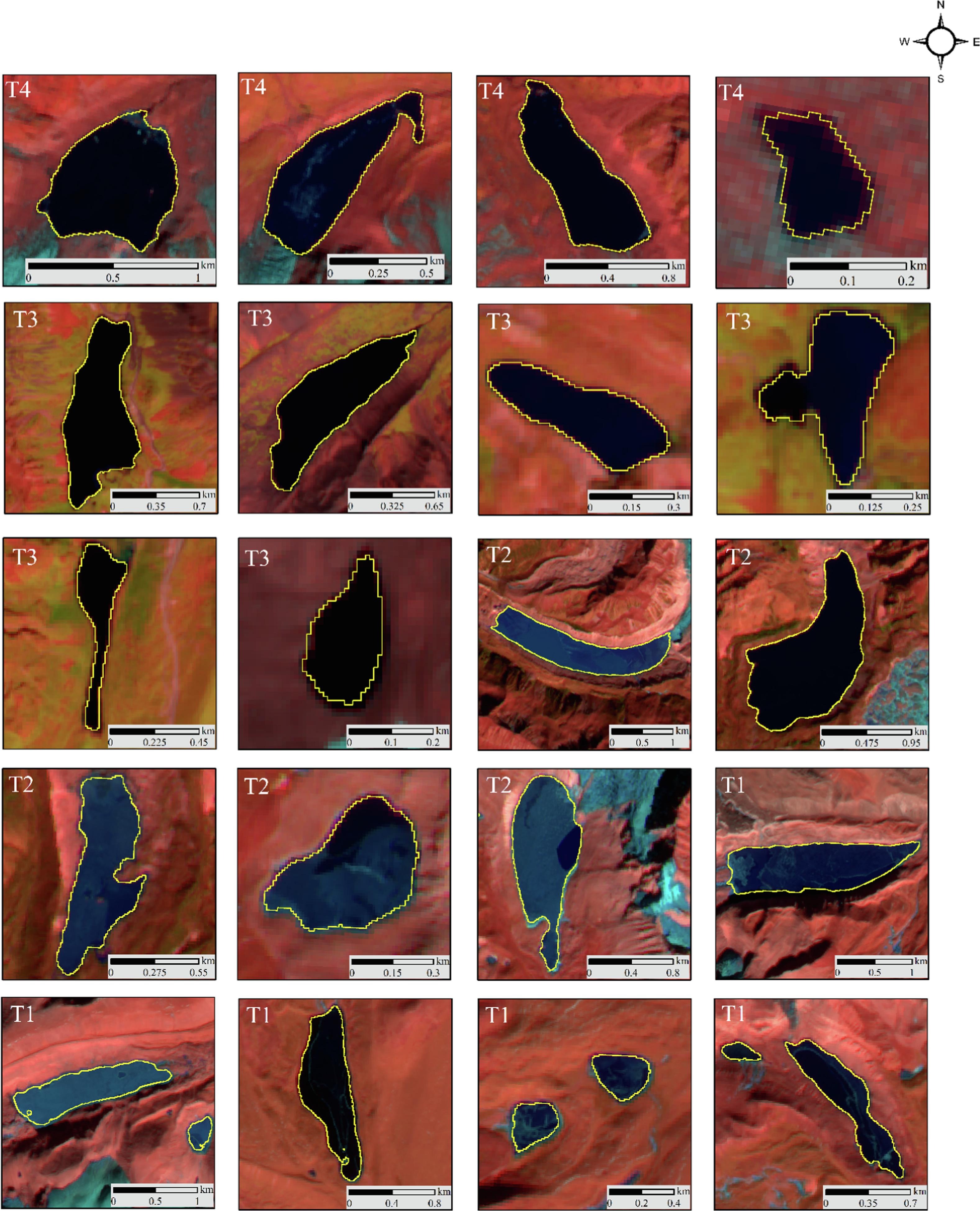
Figure: Glacial lakes in the TPR in 2020. a–p) The elevation distribution of glacial lakes for various sub-regions and the entire TPR, q) the distribution of glacial lake number and area (km2) on a 1o × 1o grid, where the circle sizes represent number, and the colors are area.

Abstract

The Tibetan Plateau and surroundings, commonly referred to as the Third Pole region, has the largest ice store outside the Arctic and Antarctic regions. Glacial lakes in the Third Pole region are expanding rapidly as glaciers thin and retreat. The Landsat satellite series is the most popular for mapping glacial lakes, benefiting from long-term archived data and suitable spatial resolution (30 m since ∼1990). However, the homogeneous mapping of high-quality, large-scale, and multi-temporal glacial lake inventories using Landsat imagery relies heavily on visual inspection and manual editing due to mountain shadows, wet ice, frozen lakes, and snow cover on lake boundaries, which is time consuming and labour-intensive. Deep learning methods have been applied to glacial lake extraction in the Third Pole and other regions, yet these methods are either concentrated on small test sites without large-scale applications or in polar regions. In this study, several classical deep convolutional neural networks were evaluated, and the DeepLabv3+ with Mobilenetv3 backbone performed best, with a high accuracy of mean intersection over union (mIoU) of 94.8 % and a low loss error of 0.4 %. The proposed method demonstrated robustness in challenging conditions such as mountain shadows, frozen or partially frozen lakes, wet ice and river contact, all without requiring extensive manual correction. Compared with manual delineation, the model's prediction has a precision rate of 86 %, recall rate of 85 %, and F1-score of 85 %. The area extracted by the model shows a strong correlation with the manual delineation (r2 = 0.97, slope = 0.94) and a high intersection over union (IoU > 0.8) of the predicted areas. A test of large-scale glacial lake mapping based on the developed automated model in 2020 across the Third Pole region shows the robust performance with 29,429 glacial lakes larger than 0.0054 km2 with a total area of ∼1779.9 km2 (including non-glacier-fed lakes). The model trained in this study can be fine-tuned for large-scale mapping of glacial lakes in other mountain regions worldwide.


Increasing risk of glacial lake outburst flood in Sikkim, Eastern Himalaya under climate warming

Published in Remote Sensing Applications: Society and Environment, 2024

Landslide Susceptibility Assessment
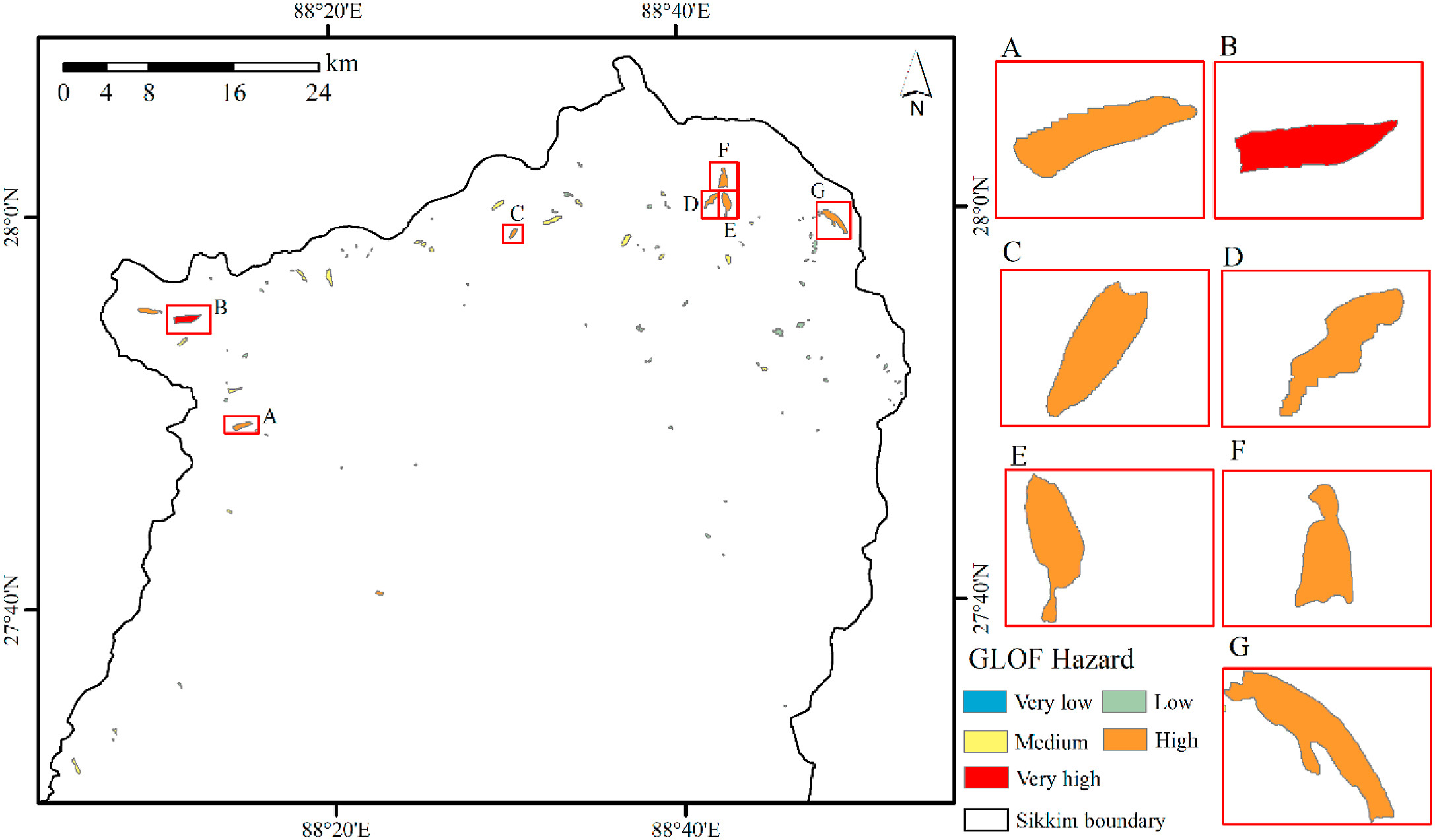
Figure: Identification of potentially dangerous glacial lakes in Sikkim Himalaya.

Abstract

The increasing risk of Glacial Lake Outburst Floods (GLOFs) in the Eastern Himalaya is exacerbated by climate change-driven glacial ice mass loss, slowdown, and increasing infrastructure projects in the high-altitude regions. To quantify the current risk of potential future disasters we update the inventory of glacial lakes in Sikkim Himalaya, identify the most potentially dangerous glacial lakes (PDGL) and model their peak discharge in different scenarios. The updated glacial lake inventory includes 232 glacial lakes (of >0.01 km2) covering a cumulative area of 22.23 ± 0.10 km2. Our GLOF susceptibility mapping of all moraine-dammed glacial lakes using an Analytic Hierarchy Process (AHP) reveals one lake as very high risk, eight as high risk, 22 as medium risk, 56 as low risk, and 18 as very low risk. Further, we apply dam break flood simulations for the seven most dangerous lakes. Results reveal highest peak discharges of 9504 m3 s−1 and 8421 m3 s−1 in extreme case scenarios from the Khanchung and South Lhonak lakes, respectively. The lowest peak discharge of 622 m3 s−1 is estimated in a normal outburst event for Yongdi lake, with every scenario at least 447 m3 s−1 discharge is reaching to Chungthang town. We find that more than 10,000 people face direct threat of GLOF with potential large-scale infrastructure damage (∼1900 settlement, 5 bridges and 2 hydropower plants). The updated glacial lake dataset, GLOF susceptibility mapping, and modeling results demonstrate the urgent need to install an early warning system and control breaching of highly dangerous lakes.


Landslide susceptibility assessment at the landscape level using multivariate analysis coupled with statistical algorithms: An insight from India’s Kailash Sacred Landscape, Western Himalaya

Published in Geomatics Natural Hazards and Risk, 2023

Landslide Susceptibility Assessment
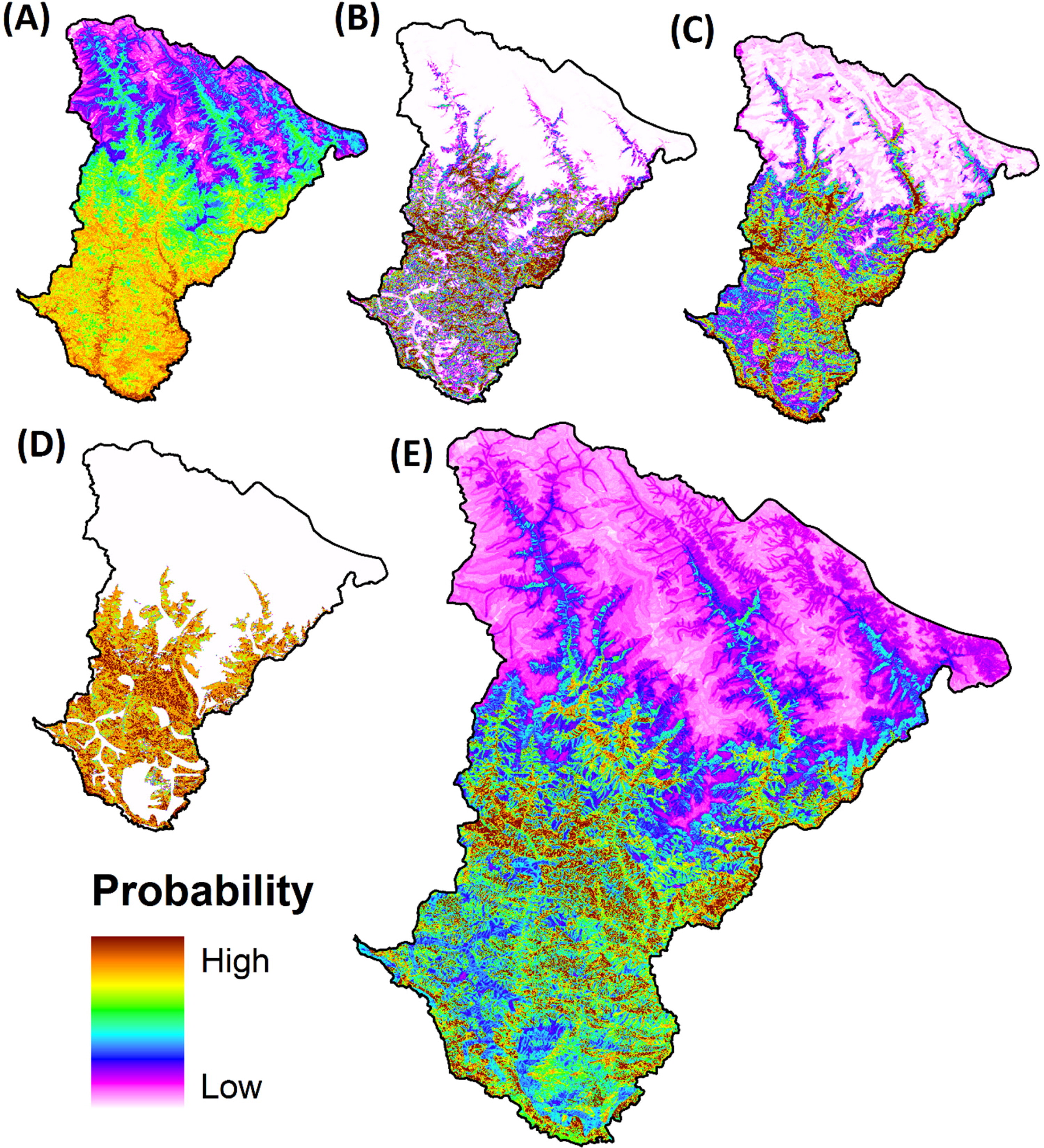
Figure: Landslide susceptibility assessment at the landscape level using multivariate analysis coupled with statistical algorithms – An insight from India’s Kailash Sacred Landscape, Western Himalaya.

Abstract

Landslide susceptibility mapping plays an imperative role in mitigating hazards and determining the future direction of developmental activities in mountainous regions. Here, we used 518 landslide occurrences and nine landslide-conditioning parameters to build landslide vulnerability models in the Kailash Sacred Landscape (KSL), India. Four multivariate statistical models were applied, namely the generalized linear model (GLM), maximum entropy (MaxEnt), Mahalanobis D2 (MD), and support vector machine (SVM), to calibrate and compare four maps of landslide susceptibility. The results demonstrated the outperformance of Mahalanobis D2 for predictability compared to other models obtained from the area under the receiver operating characteristic curve (ROC). The ensemble model data shows that 10.5% of the landscape has susceptible conditions for future landslides, whereas 89.50% of the landscape falls under the safe zone. The occurrence of landslides in the KSL is linked to the middle elevations, vicinity to water bodies, and the motorable roads. Furthermore, the observed patterns and the resulting models exhibit the major variables that cause landslides and their respective significance. The current modelling approach could provide baseline data at the regional scale to improve the developmental planning in the KSL.


Automated mapping of glacial lakes using multisource remote sensing data and deep convolutional neural network

Published in International Journal of Applied Earth Observation and Geoinformation, 2022

AEO3 AEO1
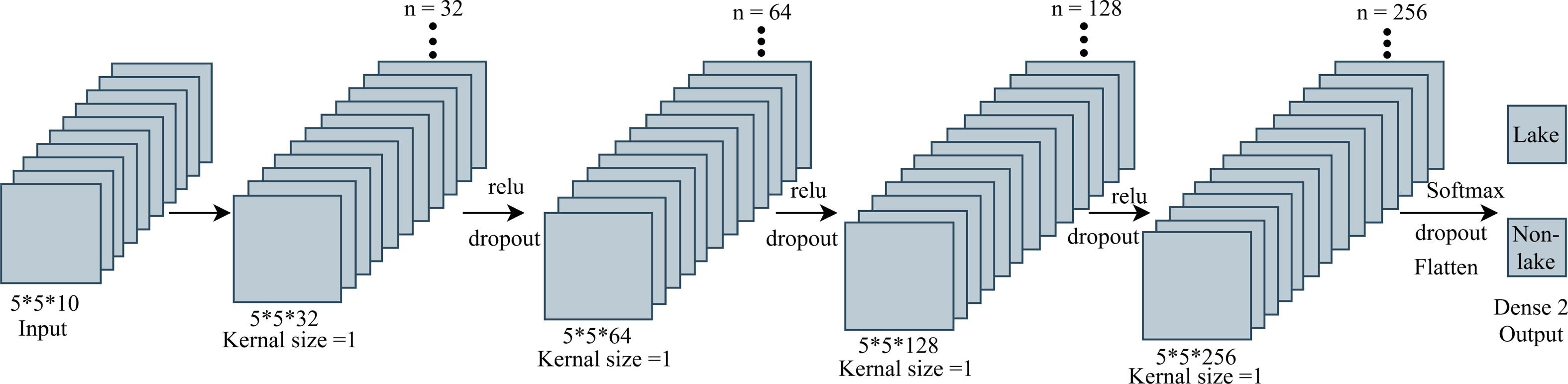
Proposed deep learning model (GLNet) and example of precise glacial lake mapping using GLNet.

Abstract

The characteristics of glacial lakes are a precursor to glacier retreat, ice mass loss, velocity, and potential risk of Glacial Lake Outburst Floods (GLOF). The current state of the art for glacial lake mapping, especially in a high mountainous region, is limited to manual or semi-automated threshold-based methods. Here, we propose a fully automated novel approach for glacial lake mapping using a Deep Convolutional Neural Network (DCNN) and remote sensing data originating from various sources. A combination of these multisource remote sensing data (i.e., multispectral, thermal, microwave, and a Digital Elevation Model) is fed to the fully connected DCNN. The DCNN architecture, namely GLNet, is designed by choosing an optimum number and size of convolutional layers, filters, and other hyperparameters. Our proposed GLNet is trained on 660 images covering twelve sites spread across diverse climatic and topographic regions of the Himalaya. The robustness of the model is tested over three sites in the Eastern Himalaya and one site in the Western Himalaya. The classification results outperform the existing state-of-the-art datasets by achieving 0.98 accuracy, 0.95 precision, 0.95 recall, and 0.95 F- score over the test data. The results over test sites (F-score test site1: 0.91, test site 2: 0.80, test site3: 0.97, and test site4: 0.70) showed promising results and spatiotemporal transferability of the proposed method. The coefficient of determination (R2) between GLNet predicted lake boundaries and reference lake boundaries exhibits excellent results (0.90). The study provides proof of concept for automated glacial mapping for large geographical regions via integrated capabilities of deep convolutional neural networks and multisource remote sensing data.


Automated delineation of supraglacial debris cover using deep learning and multisource remote sensing data

Published in Remote Sensing, 2021

Landslide Susceptibility Assessment
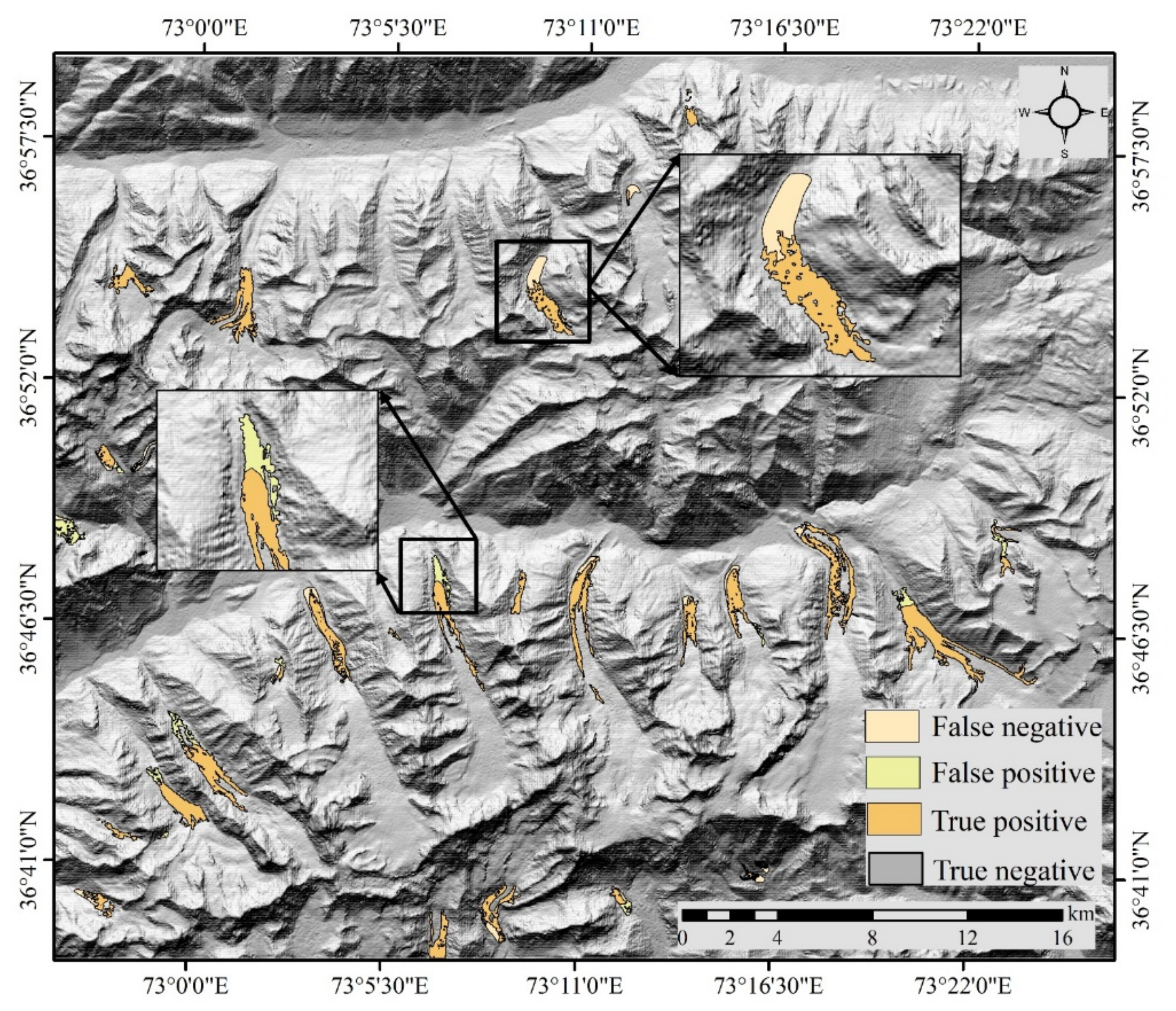
Figure: Supraglacial debris mapping using deep learning.

Abstract

High-mountain glaciers can be covered with varying degrees of debris. Debris over glaciers (supraglacial debris) significantly alter glacier melt, velocity, ice geometry, and, thus, the overall response of glaciers towards climate change. The accumulated supraglacial debris impedes the automated delineation of glacier extent owing to its similar reflectance properties with surrounding periglacial debris (debris aside the glaciated area). Here, we propose an automated scheme for supraglacial debris mapping using a synergistic approach of deep learning and multisource remote sensing data. A combination of multisource remote sensing data (visible, near-infrared, shortwave infrared, thermal infrared, microwave, elevation, and surface slope) is used as input to a fully connected feed-forward deep neural network (i.e., deep artificial neural network). The presented deep neural network is designed by choosing the optimum number and size of hidden layers using the hit and trial method. The deep neural network is trained over eight sites spread across the Himalayas and tested over three sites in the Karakoram region. Our results show 96.3% accuracy of the model over test data. The robustness of the proposed scheme is tested over 900 km2 and 1710 km2 of glacierized regions, representing a high degree of landscape heterogeneity. The study provides proof of the concept that deep neural networks can potentially automate the debris-covered glacier mapping using multisource remote sensing data.


Long-term spatiotemporal variability in the glacier surface velocity of Eastern Himalayan glaciers, India

Published in Earth Surface Processes and Landforms, 2021

Landslide Susceptibility Assessment
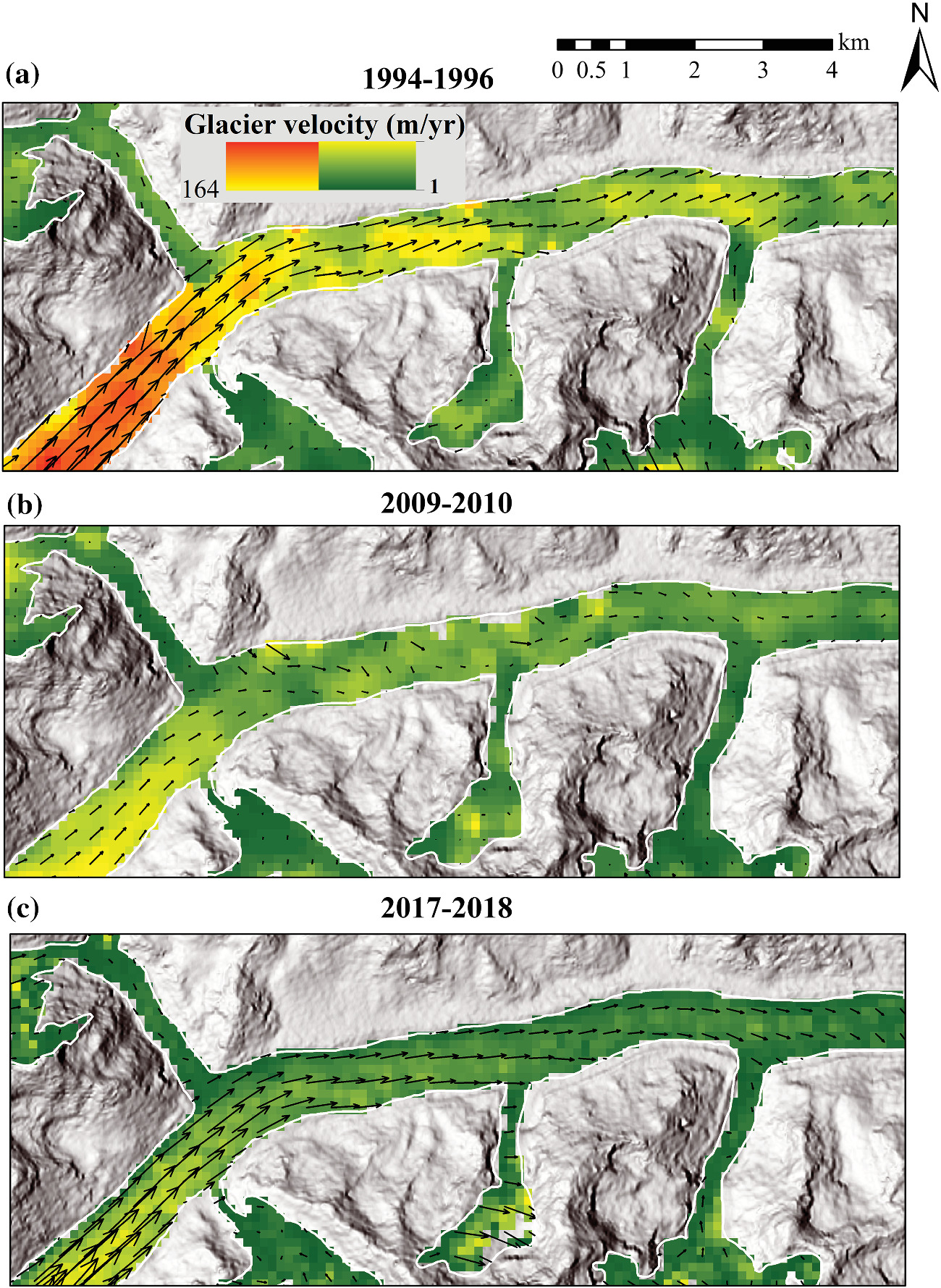
Figure: Temporal snapshot of Zemu glacial slowndown situtated in Sikkim Himalaya.

Abstract

Investigation of spatiotemporal variation in glacier velocity is imperative to comprehend glacier mass and volume loss as a function of their sensitivity to climate change. The long-term glacier velocity record for the Eastern Himalayan region is of utmost importance owing to its data scarcity and climate sensitivity. Here, we present a long-term dataset spanning more than two decades (1994–2020) of glacier surface velocity for the entire Sikkim Himalaya by applying image correlation methods on the multi-temporal Landsat images. Our results demonstrate an average glacier surface velocity decline from 15.7 ± 5.69 (1994/96) to 12.88 ± 2.09 m yr−1 (2018/2020), that is a decline of ~15% during the period of investigation. Trend analysis shows a decreasing trend in median velocity (32.2%) at a rate of 0.25 m yr−1. Despite the general decline in average glacier velocity, the rate of slowdown of individual glaciers is extremely heterogeneous (3.6–20 m yr−1). Our study shows that up to 32% of the observed heterogeneity in velocity variation can be explained by the variation in glacier size. The present study highlights that large glaciers with thick ice cover move faster compared to small glaciers (even those situated on steep slopes). The findings are significant and have direct implications for assessing future water availability scenarios and modelling glacio-hydrology in the region.


Examining the Glacial Lake dynamics in a warming climate and GLOF modelling in parts of Chandra basin, Himachal Pradesh, India

Published in Science of the Total Environment, 2020

Landslide Susceptibility Assessment
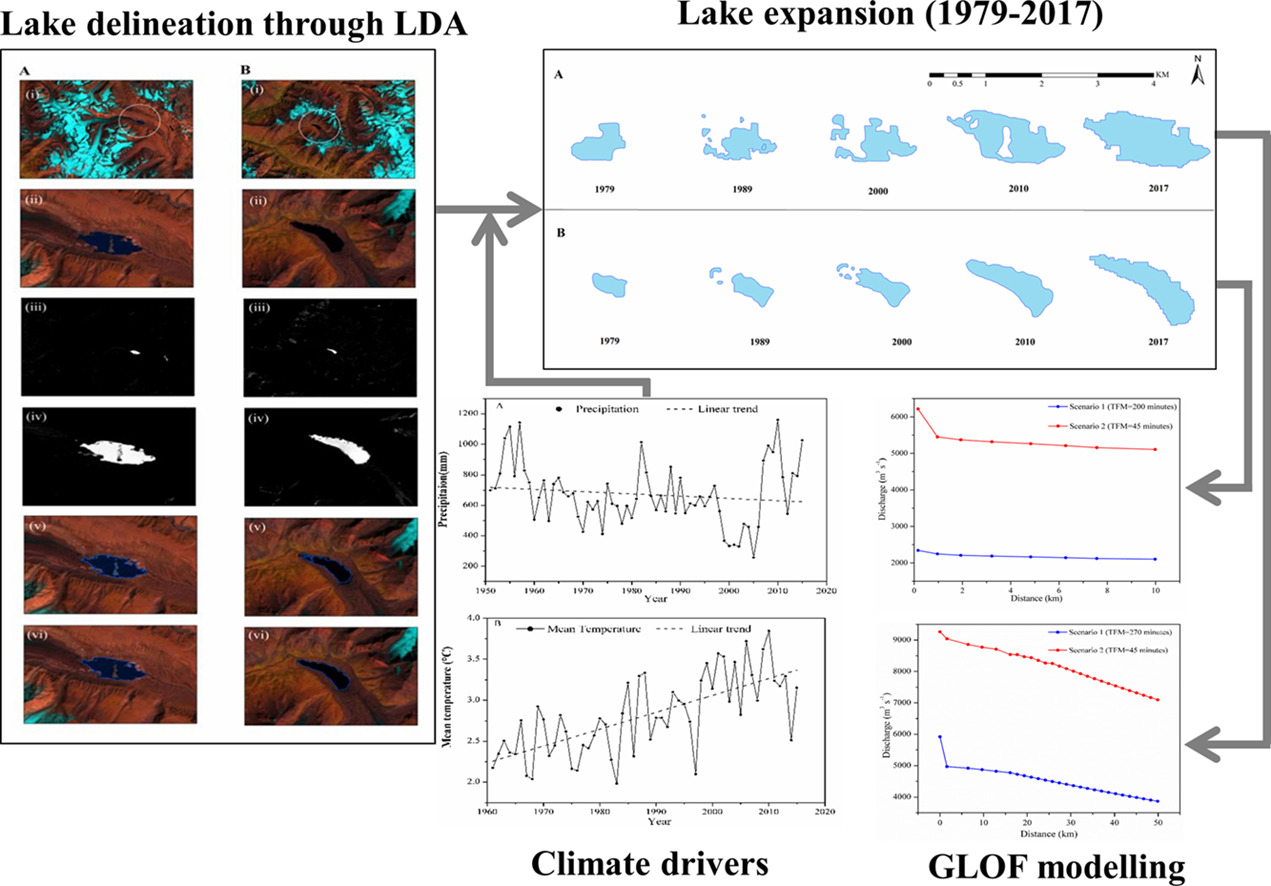
Figure: The study reports applicability of Lake Detection Algorithm (LDA), glacial lake expansion in warming climate and GLOF modelling in parts of Western Himalaya.

Abstract

The presented study reports applicability of Lake Detection Algorithm (LDA) for an automated extraction of glacial lakes over a large geographical region and dynamics of Samudra Tapu and Gepang Gath glacial lakes. The areal extent of lake boundary extracted through LDA and areal extent of manually interpreted lake boundary exhibit a remarkable agreement (R2~0.99). Glacial lake dynamics is assessed in terms of areal and volumetric expansion for two selected glacial lakes from 1979 to 2017, i.e. Samudra Tapu (0.95 km2), and Gepang Gath (0.67 km2). They show volumetric expansion from 8.52 × 10⁶ m3 (1979) to 80.34 × 10⁶ m3 (2017) and 2.04 × 10⁶ m3 (1979) to 32.44 × 10⁶ m3 (2017) respectively. Statistical analysis (Mann-Kendall and Sen's slope) of climate data indicates rise in mean annual temperature (0.021 °C yr−1; 1961–2015) and fall in annual precipitation (−2.74 mm yr−1; 1951–2015) at different confidence intervals. Further Glacial Lake Outburst Flood (GLOF) is modelled using empirical relationship and Simplified Dam Breach Model (SMPDBK). The SMPDBK demonstrates discharge of 3866.52 and 2100.90 m3 s−1 reaching Chhatru and Sissu village posing threat to life and property. The study also exhibits that glacial shrinkage under the influence of climate change causes expansion of glacial lakes. This expansion is expected to intensify catastrophic GLOF and resultant fatalities and destruction in the downstream region.


Development of glacier mapping in Indian Himalaya: a review of approaches

Published in International Journal of Remote Sensing, 2019

Abstract

The paper reviews the status of glacier mapping with special reference to the Indian Himalaya. The review provides information on various satellite remote sensing data interpretation methods used with special emphasis laid on recent semi-automated algorithms used for glacier and debris-cover mapping, along with their limitations and challenges. Further, the pragmatic solutions on offer are discussed, and the emerging areas of glacier mapping research are highlighted. The review also touches – contribution of Survey of India (SOI) and Geological Survey of India (GSI) in the glacier mapping. Finally, it discusses the wider range of spatial and spectral domains in which remote sensing data helps to inventories glaciers. The review also identifies gaps in using the latest techniques like Unmanned Aerial Vehicles (UAVs) and machine learning algorithms to improvise on the ongoing efforts. At last, the review provides an exhaustive list of references on glacier mapping from the Indian Himalaya as benefit to readers.


Climate change drives glacier retreat in Bhaga basin located in Himachal Pradesh, India

Published in Geocarto International, 2018

Landslide Susceptibility Assessment
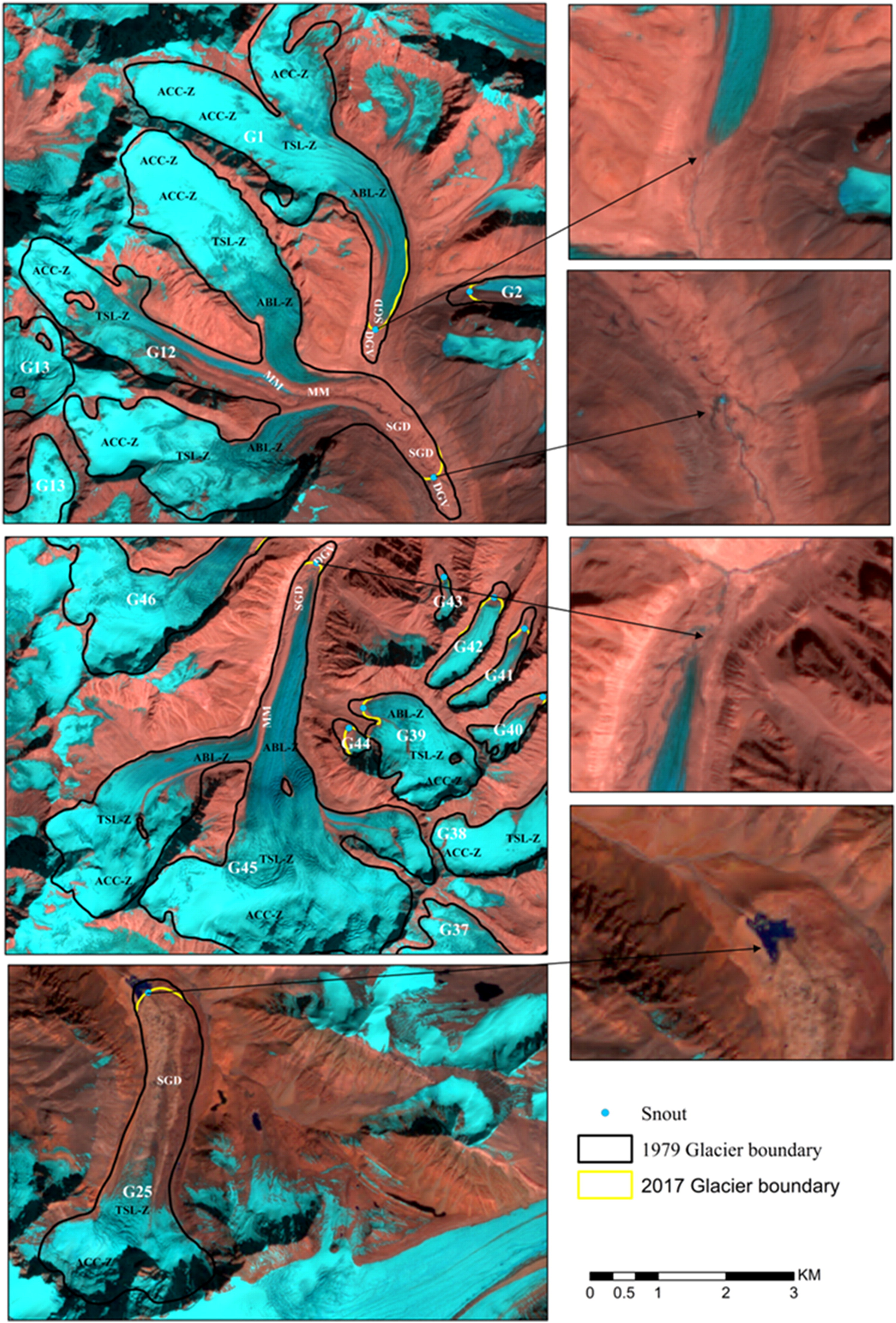
Figure: Features of some major glaciers with snout visible in 2017 satellite data. ACC-Z, accumulationzone; ABL-Z, ablation-zone; TSL-Z, transition zone; MM; medieval moraine; SGD, supraglacial debris;DGV, de-glaciated valley.

Abstract

This paper reports changes in different glaciers of Bhaga basin located in western Himalaya, from 1979 to 2017. Glacier boundaries were delineated through semi-automated approach using Landsat satellite imagery. The variation of glacier extent in different elevation zones, snout retreat and decadal changes are observed. Results show that the total area of glaciers was 238 km2 in 1979, which reduced to 230.8 km2 by 2017 (retreat rate 12 m⁢ yr−1). Glaciers at low elevation and smaller in size are retreating faster. Analysis of Asian Precipitation-Highly Resolved Observational Data Integration Towards Evaluation data shows decreasing trend of annual precipitation (–2.724 mm yr−1, 1951–2015) and increasing trend of mean annual temperature (0.021° C⁢ yr−1). The statistical analysis using Mann-Kendall and Sen’s slope tests, applied at different confidence interval demonstrates that climate change corresponds to deglaciation, and topography controls glacier recession in the basin.


Conference Papers


Conference Presentations

Conferences

  • Kaushik Saurabh, Kandpal Kishore, Singh Tejpal, and Joshi P.K.
    Analysis of Climate Variability and Anticipated Risk of Glacial Lake Outburst in Sikkim Himalaya
    5th International YES Congress, Berlin, 2019

  • Kaushik Saurabh, Joshi P.K., Singh Tejpal, and Bhardwaj Anshuman
    Linking glacial lake expansion with glacier dynamics: An assessment of the South Lhonak lake, Sikkim Himalaya
    EGU General Assembly 2020
    DOI: 10.5194/egusphere-egu2020-685

  • Kaushik Saurabh, Singh Tejpal, Joshi P.K., and Dietz Andreas J
    Automated mapping of Eastern Himalayan glacial lakes using deep learning and multisource remote sensing data
    EGU General Assembly 2022
    DOI: 10.5194/egusphere-egu22-2904

  • Kaushik Saurabh, Singh T., Joshi P.K., Dietz A.
    Deep learning framework for automated mapping of glacial lakes using multisource remote sensing data
    ISMASS workshop 2022 “Ice Sheets: Weather vs Climate”, Reykjavík, Iceland, 23-24 August 2022

  • Kaushik Saurabh, Ian M. Howat, Sam Herreid, Joachim Moortgat
    Searching for Geological Hydrogen with Multisource Remote Sensing Data and AI
    AGU Fall Meeting 2023
    Link

  • Herreid Sam, Kaushik Saurabh, Howat Ian, Moortgat Joachim
    Combining Deep Learning and a Sparse Global Dataset of Free Hydrogen Associated Fairy Circles to Inform Exploration into a Potentially Revolutionizing Green Energy Source
    AGU Fall Meeting 2023
    Link

  • Kaushik Saurabh, Sam Herreid, Ian M. Howat, Joachim Moortgat
    Mapping and Analyzing Geological Hydrogen-related ‘Fairy Circles’ using AI-Driven Remote Sensing
    AGU Fall Meeting 2024
    Link

Landslide Susceptibility Assessment
Figure: Global map of potential geological hydrogen sites using deep learning and multisource remote sensing data.
  • Kaushik Saurabh, Tellman Beth, Zhijie Zhang, Rohit Mukherjee
    Improving urban flood inundation observations using multisource remote sensing data and masked autoencoder-based transformers
    American Geophysical Union (AGU) 2024

  • Kaushik Saurabh, Jaydeo Dharpure, Tellman Beth
    Combining multisource remote sensing data and convolutional neural networks for debris cover mapping
    Debris Cover Glacier Workshop, ISTA, Austria, 2024